
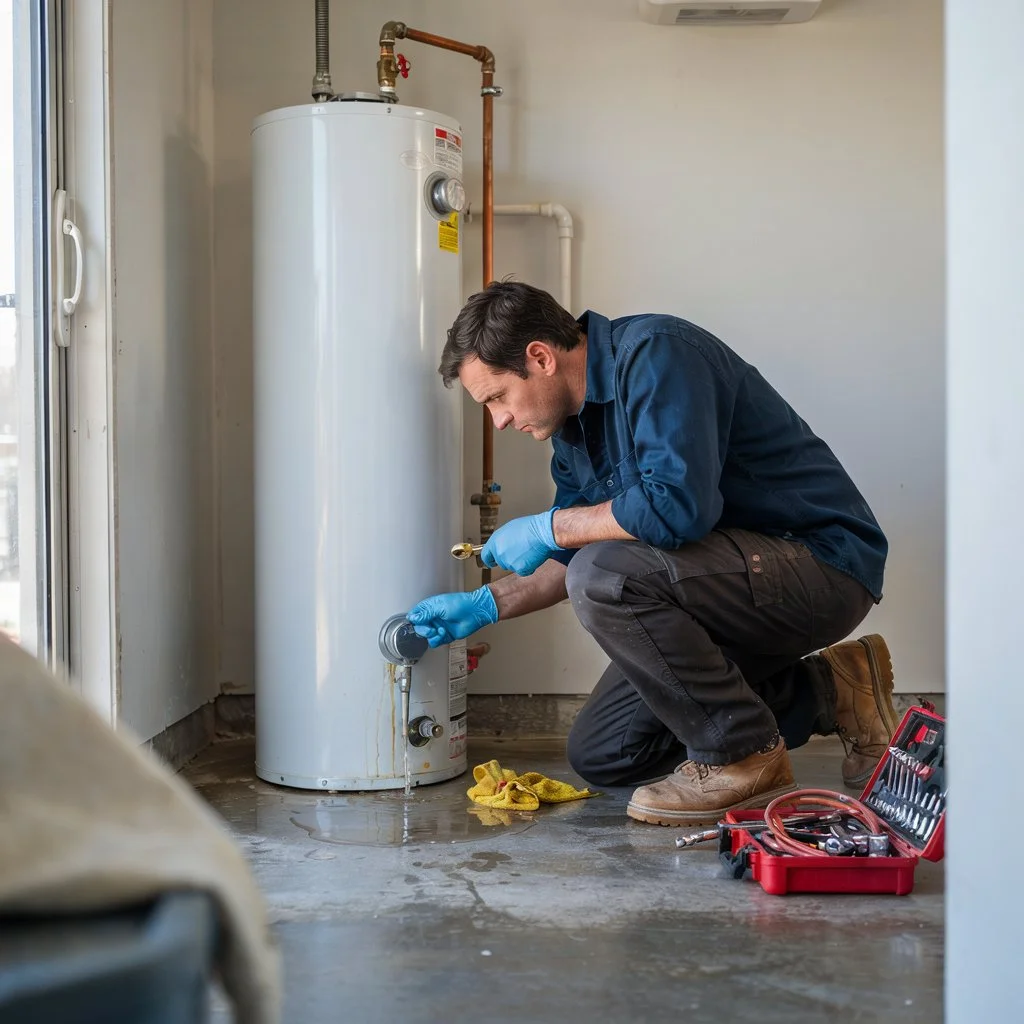
A leaking water heater is not something that you should ignore. It may start with a small puddle near the tank, but that small puddle can quickly turn into water damage, mold, electrical danger, or a completely failed water heater.
The good news is that you do not need to panic. You just need to act fast and act smart.
Your water heater works every day. It stores hot water for showers, laundry, dishes, and cleaning. But like any appliance, it can wear out over time.
A leak is usually a warning sign that something is wrong. Sometimes the fix is simple, like tightening a loose connection. Other times, the tank itself is damaged and needs to be replaced.
In this blog post, you will be guided on what to do if your water heater tank is leaking, how to find where the leak is coming from, when it can be repaired, and when it is time to call a professional expert.
Is a Leaking Water Heater an Emergency?
Yes, a leaking water heater can become an emergency, especially if water is spreading across the floor or getting close to electrical parts. Even a slow leak should be taken seriously because water damage does not wait politely. It gets into flooring, walls, cabinets, and nearby belongings.
A tiny drip may not look dangerous at first. But if the leak is coming from the tank itself, it usually means the inside of the water heater has started to fail. Once that happens, the leak can get worse quickly.
You should act immediately when you notice water pooling up around the water heater base, rust on the tank, strange noises, hot water running out faster than usual, or water dripping from valves or pipes. These signs tell you the system needs attention now, not next week.
What to Do Immediately If Your Water Heater Tank Is Leaking
The first thing to do is stop the situation from getting worse. Do not stand around guessing. Take a few direct steps to protect your home and stay safe.
Firstly, you should turn off the power supply. If you have an electric water heater, switch it off at the breaker box. If you have a gas water heater, turn the gas control knob to “off” or “pilot.” This helps prevent electrical shock, overheating, or other safety risks.
Next, shut off the water supply. Look for the cold water valve near the top of the water heater and turn it clockwise until it stops. This keeps more water from entering the tank.
If water is still leaking badly, you may need to drain the whole water tank using a hose pipe through the drain valve near the bottom of the heater and run the other end to a floor drain or safe outdoor area. Be careful because the water may be very hot.
Here are the most important emergency steps:
- Turn off the power or gas.
- Shut off the cold water supply.
- Move items away from the leak.
- Clean up standing water.
- Call a plumber if the leak is serious or coming from the tank.
Once the area is safe, try to find where the water is coming from. But do not open panels, touch wires, or take apart parts unless you know what you are doing.
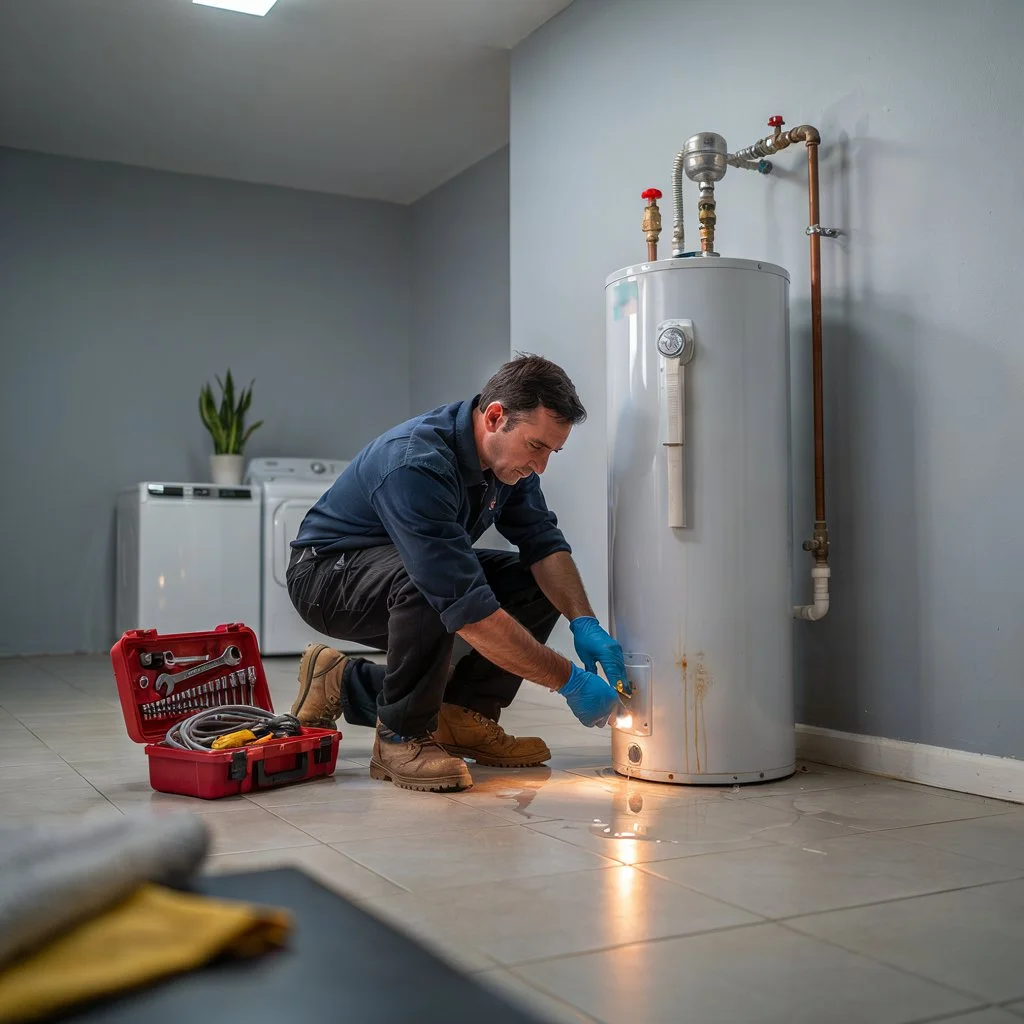
How to Identify Where the Leak Is Coming From?
Not every water heater leak means the tank is ruined. Sometimes the leak comes from a valve, pipe, or fitting. That is why checking the source matters.
Start at the top of the water heater. Look around the hot and cold water connections. If water is dripping from these areas, the problem may be a loose pipe fitting. That is usually easier to repair than a leaking tank.
Secondly, you should check the temperature and pressure relief valve, often called the T&P valve. This valve is a safety feature. It releases water if pressure or temperature gets too high inside the tank. If it keeps leaking, the valve may be faulty, or your water pressure may be too high.
Then check the drain valve near the bottom. If water is dripping from this valve, it may not be fully closed, or the valve may need replacement.
Now look at the base of the water heater. If water is coming from the bottom of the tank and not from the drain valve, that is more serious. A bottom leak often means the inner tank has rusted or cracked. When the tank itself leaks, repair is usually not worth it.
Also, make sure it is not just condensation. Sometimes a cold water heater in a damp room can create moisture on the outside. But if you see a steady puddle forming, it is probably a real leak.
Common Causes of Leakage in Water Heater Tank
Water heaters leak for several reasons. Some are minor. Some are expensive. The cause depends on the age of the unit, water quality, pressure, and maintenance history.
One of the most common causes is internal corrosion. Water heaters have metal tanks, and metal can rust over time. Most tanks have a part called an anode rod that helps fight rust. But when that rod wears out, the tank becomes more exposed to corrosion.
Sediment buildup is another major cause. Minerals from water settle at the bottom of the tank, and over time this layer of sediment hardens and makes the heater work harder, creates popping noises, and can damage the tank from the inside.
High water pressure can also cause the leaks. If the pressure inside your plumbing system is too strong, it puts stress on the tank, valves, and connections. Think of it like blowing too much air into a balloon. Sooner or later, something gives.
Loose plumbing connections are another possible reason. Pipes expand and contract as hot water moves through them. Over time, fittings may loosen and start dripping.
Old age is also a big factor. Most tank water heaters do not last forever. Once they get older, leaks become more common. If your unit is already near the end of its life, a leak may be the final warning sign.
Can a Leaking Water Heater Tank Be Repaired?
This depends on where the leak is coming from.
If the leak is from a loose connection, drain valve, or pressure relief valve, repair may be possible. A plumber can tighten fittings, replace a valve, or fix small plumbing issues around the heater.
But if the tank itself is leaking, that is different. The inside of the tank is not something you can properly patch from the outside. Temporary sealants may slow the leak for a short time, but they do not solve the real problem. The tank is already damaged.
A leaking tank usually means replacement is the smarter choice. Trying to repair a failed tank can waste money and still leave you with the same risk.
Here is the simple rule: leaks from parts may be repairable. Leaks from the tank usually mean replacement.
How to Tell If You Need a New Water Heater
A leaking tank is one of the clearest signs that you may need a new water heater. But there are other warning signs too.
If your water heater is more than eight to twelve years old, it may already be near the end of its service life. Some units last longer with good care, but age still matters.
Rust-colored hot water is another red flag. If the rusty water only comes from the hot tap, the problem may be inside the water heater. That can mean corrosion is happening inside the tank.
Frequent repairs are also a warning sign. If you keep paying to fix one issue after another, replacement may cost less in the long run.
You may also notice poor heating performance. Maybe your showers turn cold too fast. Maybe the water takes longer to heat. Maybe the heater makes loud popping or rumbling sounds. These are all signs the unit is struggling.
If you see leaks, rust, strange noises, and poor performance together, do not keep forcing the system to work. It is probably time to replace it.
How Much Does It Cost to Repair or Replace a Leaking Water Heater?
The cost depends on the problem. A small repair, like replacing a valve or tightening a connection, usually costs much less than replacing the whole unit.
If the leak is from a drain valve, pressure relief valve, or pipe connection, the repair may be fairly simple. But if the tank is leaking, replacement is usually needed.
Replacement costs can vary based on the size of the water heater, type of unit, labor, location, permits, and whether plumbing updates are needed. A larger family may need a bigger tank, while a smaller home may only need a standard-size unit.
Tankless water heaters can cost more upfront, but they save space and heat water only when needed. Traditional tank water heaters usually cost less to install, but they store hot water all day.
The best move is to get a professional inspection before spending money. You do not want to replace a unit that only needs a valve. You also do not want to repair a tank that is already failing.
Can You Still Use a Leaking Water Heater?
Using a leaking water heater is risky. It may still produce hot water, but that does not mean it is safe.
If the leak is small and coming from a minor part, you may be able to use the heater for a short time after a plumber checks it. But if water is leaking from the tank, you should not keep using it.
Water and electricity are a dangerous combination. If water reaches electrical parts, it can create shock risks. With gas water heaters, leaks can still damage the burner area or nearby components.
There is also the risk of the tank failing suddenly. A weak tank can release a lot of water at once. That can damage floors, walls, and anything stored nearby.
So, the safe answer is this: do not keep using a leaking water heater until you know exactly where the leak is coming from.
How to Prevent Future Water Heater Leaks
You cannot make a water heater last forever, but you can help it last longer.
Regular maintenance is the key. Flushing the water tank once a year helps remove sediment from the bottom. This lets the heater work better and reduces stress on the tank.
The anode rod should also be checked. This small part protects the tank from rust, and if it wears out, the tank becomes more likely to corrode. So you should replace the anode rod at the right time, which can add a couple of more years to the life of your water heater.
The pressure relief valve should be tested too. Since this valve protects the tank from too much pressure, it needs to work properly.
You can also install a leak detector near the water heater. Some devices make an alarm sound when they detect water. Others can even shut off the water automatically.
When to Call a Professional Plumber
You should call a plumber if you cannot find the leak, if water is coming from the bottom of the tank, if the heater is old, or if the leak is getting worse.
A plumber can inspect the tank, valves, water pressure, pipes, and safety features. They can tell you whether the unit can be repaired or needs replacement.
Do not try to handle gas lines, electrical wiring, or major water heater repairs on your own. A water heater may look simple from the outside, but it holds hot water, pressure, electricity, or gas. That is not the place to guess.
Calling a professional early can prevent bigger damage and help you make the right decision.
Conclusion
A leaking water heater tank is a warning you should take seriously. It may be a small valve issue, or it may be the tank telling you it is done. Either way, fast action protects your home.
Start by turning off the power or gas, shutting off the water supply, and cleaning up standing water. Then look for the source of the leak. If it is coming from a pipe, valve, or fitting, repair may be possible. If it is coming from the tank itself, replacement is usually the safest choice.
The smartest thing you can do is not ignore the leak. Water damage gets expensive fast, and a failing water heater can turn into a much bigger problem without warning.
Take action early, call a professional when needed, and keep up with basic maintenance. Your water heater will work better, last longer, and give you one less thing to worry about.
