
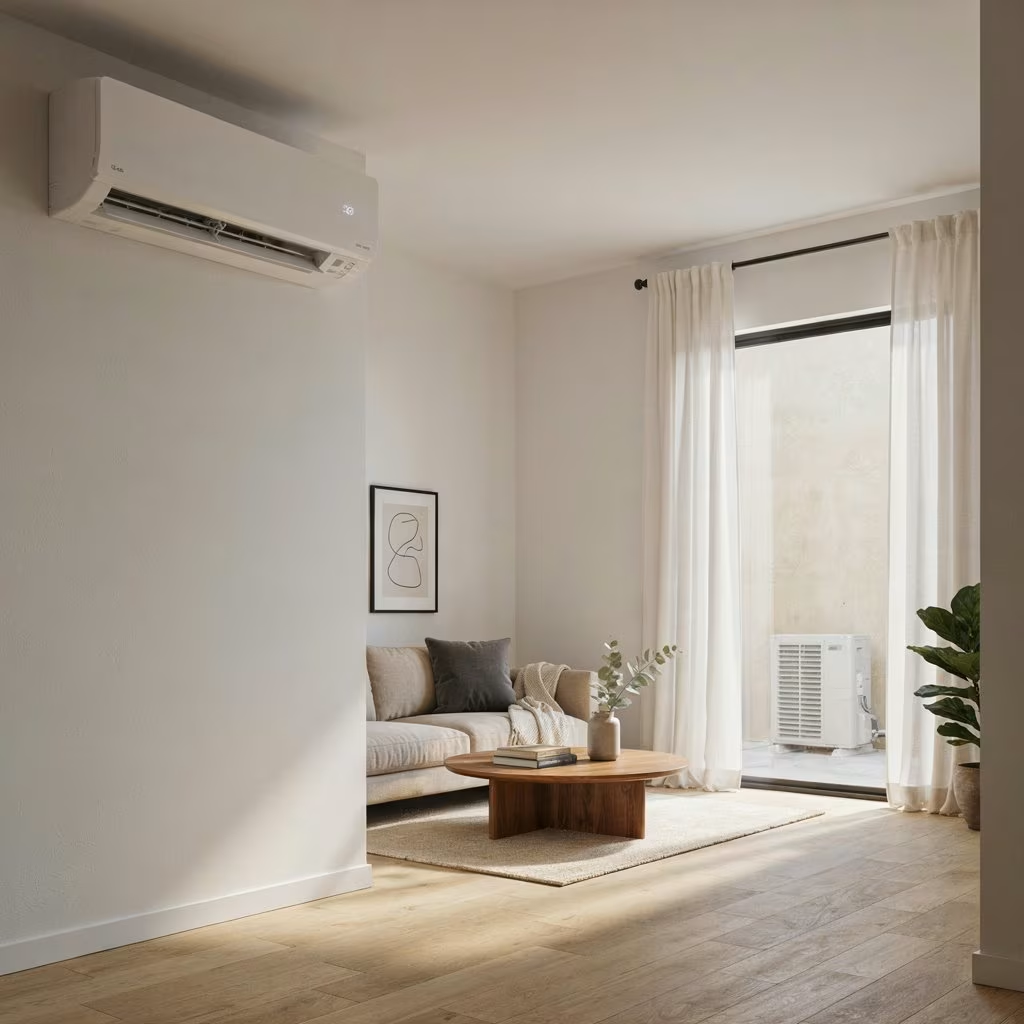
If your house has that one room that’s always too hot, too cold, or simply impossible to reach with your existing ductwork, you’ve probably already typed “ductless mini split heat pump” into Google more than once. You’re not alone, and you’re in the right place.
A ductless mini split heat pump is a compact heating and cooling system that skips ductwork entirely. It uses a small outdoor unit connected to one or more wall-, ceiling-, or floor-mounted indoor units through a thin refrigerant line. No lost air, no bulky vents, and no noisy window unit blocking your view just a system that heats and cools exactly the rooms you need, exactly when you need them.
This guide covers everything the “quick answer” boxes on Google skip: real 2027 installed costs by zone, how the refrigerant cycle actually moves heat, sizing math you can do yourself, cold-climate performance numbers, and the tax-credit change almost every other article is still getting wrong. Let’s get into it.
What Is a Ductless Mini Split Heat Pump?
A ductless mini-split heat pump is a two-part HVAC system an outdoor condenser unit and one or more indoor air handlers (sometimes called “heads”). Instead of pushing conditioned air through a network of ducts, each indoor unit heats or cools the room it’s mounted in directly.
The word “mini split” refers to the system being split into indoor and outdoor components, connected by a slim conduit carrying refrigerant, power, and a condensate drain line through a small hole in your wall, typically just 3 inches in diameter. Because there’s no ductwork involved, these systems are also called ‘ductless heat pumps’, and each indoor unit or group of units tied to one outdoor condenser is referred to as a ‘zone’.
Unlike a furnace or boiler, a mini split doesn’t generate heat by burning fuel. It moves heat that already exists in the outdoor air into your home (and reverses the process to cool your home in summer), which is exactly why it’s classified as a heat pump rather than a standalone air conditioner.
How Does a Ductless Mini Split Heat Pump Work?
The system runs on the same refrigeration cycle as your refrigerator, just working in both directions.
In cooling mode:
- The indoor unit pulls warm air from the room across a refrigerant-filled coil.
- The refrigerant absorbs that heat and turns into a gas.
- The gas travels through the line set to the outdoor compressor, which pressurises and heats it further.
- The outdoor coil releases that heat into the outside air.
- The now-cooled refrigerant cycles back inside to repeat the process.
In heating mode, a reversing valve flips the entire cycle: the outdoor unit extracts latent heat from the outside air even when it’s cold, and the indoor coil releases that heat into the room.
A single outdoor condenser can typically power between one and eight indoor units, depending on the brand and outdoor unit capacity, letting you set a different temperature in every zone. That’s the core advantage a ductless mini split heat pump has over central air: zoned comfort with almost none of the energy loss that ductwork causes.
Types of Indoor Units
Not every mini split has to be the wall-mounted rectangle you’re picturing. Common configurations include:
- Wall-mounted the most common and most affordable; installed high on a wall for even airflow.
- Ceiling cassette sits flush in the ceiling for a nearly invisible look, ideal for open-concept rooms.
- Floor-mounted (console) installed near the floor, similar to a baseboard heater; useful when wall or ceiling space isn’t available.
- Ducted (concealed) a compact air handler hidden above a ceiling that feeds a short run of ductwork to a few vents, blending mini split efficiency with a fully ductless look.
Ductless Mini Split Heat Pump: Pros and Cons
Pros
- Room-by-room temperature control. Every zone runs independently, so bedrooms, home offices, and rarely used guest rooms are never over- or under-conditioned.
- Higher efficiency. Ducted systems lose roughly 20–30% of conditioned air through leaks and poor insulation, according to ENERGY STAR. A ductless mini split heat pump avoids that loss almost entirely because it delivers air right where it’s generated.
- Heating and cooling in one system. A single mini split heat pump replaces both your air conditioner and your furnace or baseboard heat, and does it up to 2–4 times more efficiently than electric resistance heat.
- Fast, low-mess installation. Most installs need only a small wall penetration rather than tearing into walls or ceilings for ductwork often a one- to two-day job.
- Built-in dehumidification. Many models include a dedicated dry mode that pulls humidity from the air without over-cooling the room.
- Quieter than you’d expect. Indoor units typically run between 19–45 decibels closer to a quiet library than a traditional AC unit.
Cons
- Higher upfront cost per zone than adding a single central air system, especially for whole-home multi-zone setups.
- The indoor unit is visible even a slim wall-mounted head is more noticeable than a ceiling vent, though ceiling cassettes minimise this.
- Electrical work is often required, sometimes including a dedicated 208–230V circuit or, in older homes, a panel upgrade.
- Cold-climate performance drops off below a manufacturer’s rated minimum unless you choose a cold-climate-rated model (more on this below).
- Regular filter cleaning is on you indoor filters should be rinsed or vacuumed roughly every 2–4 weeks for best performance.
Ductless Mini Split vs. Central Air vs. Window Units
| Feature | Ductless Mini Split Heat Pump | Central Air + Furnace | Window AC Unit |
| Ductwork required | No | Yes | No |
| Zoned temperature control | Yes, per room | No (single thermostat) | Per room, no heating |
| Typical efficiency loss | Minimal (no ducts) | 20–30% through ducts | Low, but poor seal |
| Heats and cools | Yes | Only with separate furnace | Cooling only (usually) |
| Upfront cost | Moderate–high per zone | Lower if ducts exist | Lowest |
| Installation time | 1–3 days | Days to weeks (new ducts) | Under an hour |
| Noise level | 19–45 dB indoor | Similar, remote air handler | 50–60 dB, louder |
| Best for | Additions, no-duct homes | Whole-home, ducts exist | Single-room, short-term |
Bottom line: if your home already has good, well-sealed ductwork, central air may still win on upfront cost. If you’re adding a room, live in an older home without ducts, or want to stop fighting over the thermostat, a ductless mini split heat pump usually wins on efficiency and comfort.
How Much Does a Ductless Mini Split Heat Pump Cost in 2027?
Installed pricing depends mostly on zone count, not on brand alone. Here’s what 2027 data actually shows:
| Configuration | Installed Cost Range (2027) |
| Single-zone (one room) | $2,000 – $6,000 |
| Two-zone system | $5,000 – $8,000 |
| Multi-zone (3–4 rooms) | $8,000 – $18,000+ |
| DIY unit only (no install) | $700 – $3,500 |
| Labor per zone | $1,000 – $3,500 |
A few cost drivers worth knowing before you request quotes:
- Line-set length the farther the indoor unit sits from the outdoor condenser, the more labor and refrigerant it takes.
- Electrical capacity a home needing a panel upgrade will see meaningfully higher costs than one with adequate service already.
- SEER2 rating higher-efficiency inverter-driven units cost more upfront but run cheaper monthly, often $30–$80 a month for a single zone depending on climate and electricity rates.
- Refrigerant type 2027 models are required to use low-GWP A2L refrigerants (R-32 or R-454B), which adds roughly 10–15% to equipment cost compared with older R-410A systems, but improves long-term environmental compliance.
Important 2027 update most guides still miss: the federal 25C tax credit that covered ENERGY STAR-certified heat pumps expired on December 31, 2025, and does not apply to systems installed in 2027. If you’re budgeting based on an older article mentioning “$2,000 back,” that credit is gone for new installs but state programs, utility rebates ($200–$2,000+ in many areas), and income-qualified HEAR rebates may still be available. Check current listings at DSIREUSA.org before you commit to a system.
Sizing a Mini Split: How Many BTUs Do You Need?
Undersizing leaves a room struggling on the hottest or coldest days; oversizing wastes money and causes the unit to short-cycle. As a starting point:
- 150–250 sq. ft. → 6,000–9,000 BTU
- 250–400 sq. ft. → 9,000–12,000 BTU
- 400–650 sq. ft. → 12,000–18,000 BTU
- 650–1,000 sq. ft. → 18,000–24,000 BTU
These are rough guidelines only. Ceiling height, insulation quality, window exposure, and local climate all shift the number, which is why a proper Manual J load calculation from an HVAC contractor beats any online rule of thumb.
Does a Ductless Mini Split Heat Pump Work in Cold Weather?
Yes but performance depends heavily on the model. Standard mini splits are rated to operate efficiently down to roughly 30–40°F, with efficiency and heat output gradually declining below that. Below their rated minimum, most units either draw more power to compensate or need a backup heat source, such as electric baseboard or a gas furnace, to cover extreme cold snaps.
That said, cold-climate mini split heat pumps are a different category entirely. Several current models are rated to maintain rated heating capacity down to 5°F, and some can still produce heat as low as -13°F. If you live somewhere winters regularly drop below freezing, ask specifically for a cold-climate-rated unit it’s the single biggest factor separating “works fine” from “struggles all January” in northern climates.
Maintenance: What Ductless Systems Actually Need
One underrated advantage of ductless mini split heat pumps is how little upkeep they demand compared with a ducted system:
- Clean or rinse indoor filters every 2–4 weeks during heavy use.
- Clear the condensate drain line once or twice a year to prevent leaks.
- Keep the outdoor unit clear of leaves, snow, and debris for unrestricted airflow.
- Schedule a professional tune-up annually to check refrigerant charge and electrical connections.
Because each indoor unit has its own accessible filter, most homeowners can handle basic maintenance with nothing more than a stepladder no duct cleaning service required.
DIY vs. Professional Installation
Several manufacturers now sell pre-charged, DIY-friendly mini split kits that a confident homeowner can install without releasing refrigerant. That’s a real option for a single-zone system in a garage, workshop, or bonus room.
For most homes, though, professional installation is worth the cost: contractors handle the electrical work correctly, know local permitting requirements, properly vacuum and charge the line set, and typically unlock manufacturer warranties of up to 12 years, something most DIY installs forfeit.
Is a Ductless Mini Split Heat Pump Right for Your Home?
A ductless mini split heat pump makes the most sense if you:
- Have a room or addition with no existing ductwork
- Want independent temperature control instead of one house-wide setting
- Are replacing an aging window unit, baseboard heater, or oil furnace
- Care about minimizing energy loss and lowering monthly utility bills
- Live somewhere winters are mild-to-moderate, or you’re willing to invest in a cold-climate-rated model
It’s less of a fit if you already have well-sealed, efficient ductwork throughout the whole house and simply need a straightforward, lower-cost whole-home replacement.
Ready to Make the Switch?
A ductless mini split heat pump can solve your temperature problems room by room, cut your energy bills, and remove the need for a separate furnace and air conditioner altogether. Before you buy, get at least two to three quotes from licensed local HVAC contractors, ask specifically about SEER2 rating and cold-climate performance, and check your state and utility rebate listings. 2027 pricing rewards homeowners who compare before they commit.
Start today: request a free load calculation and quote from a licensed HVAC pro in your area, and find out exactly what a ductless mini split heat pump would cost for your home.
