
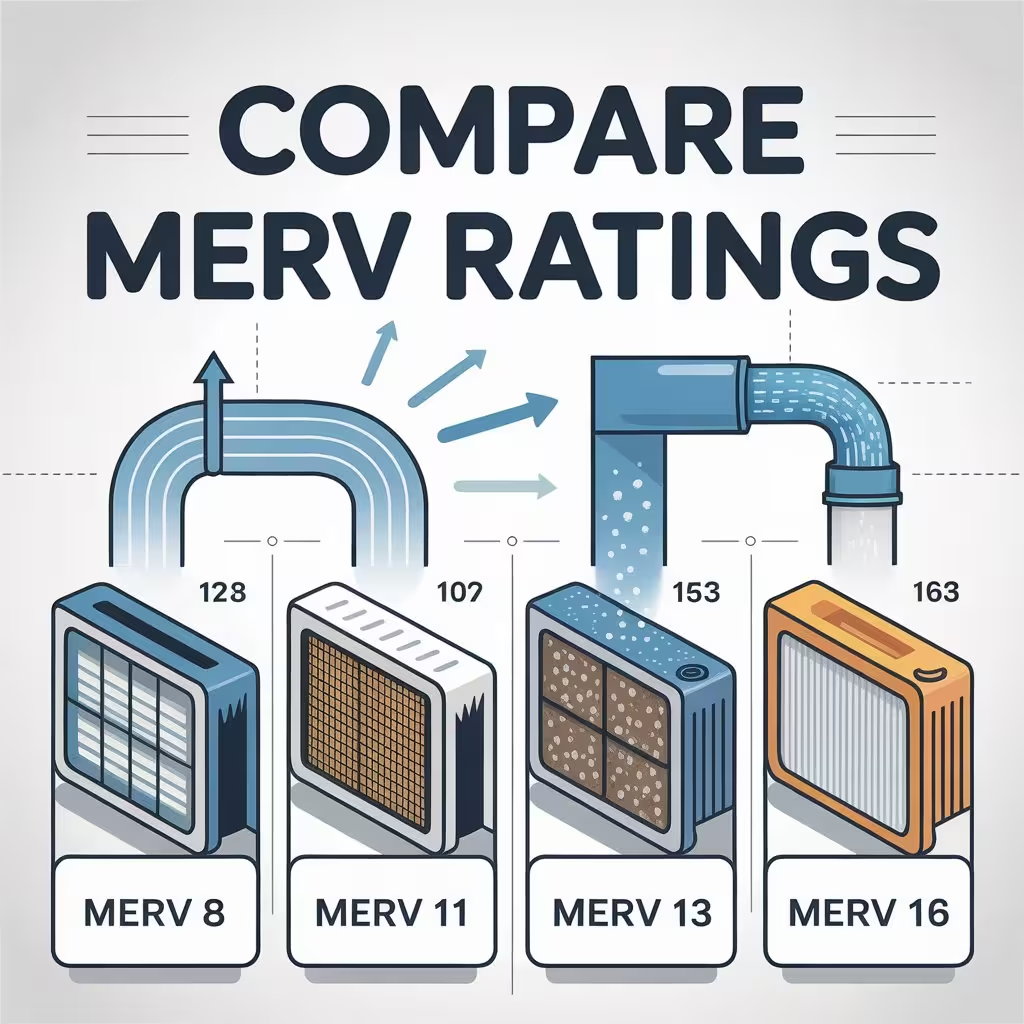
You’re standing in the filter aisle at the hardware store, and there’s a wall of options. MERV 8. MERV 11. MERV 13. One costs $6, another costs $28. You grab the middle one and hope for the best.
Sound familiar? You’re not alone. Most homeowners have no idea what MERV actually means or that picking the wrong rating can quietly damage their HVAC system while doing nothing useful for their air quality.
This guide fixes that. By the end, you’ll know exactly which MERV rating your home needs, why going too high can backfire, and what actually matters when you’re buying a filter.
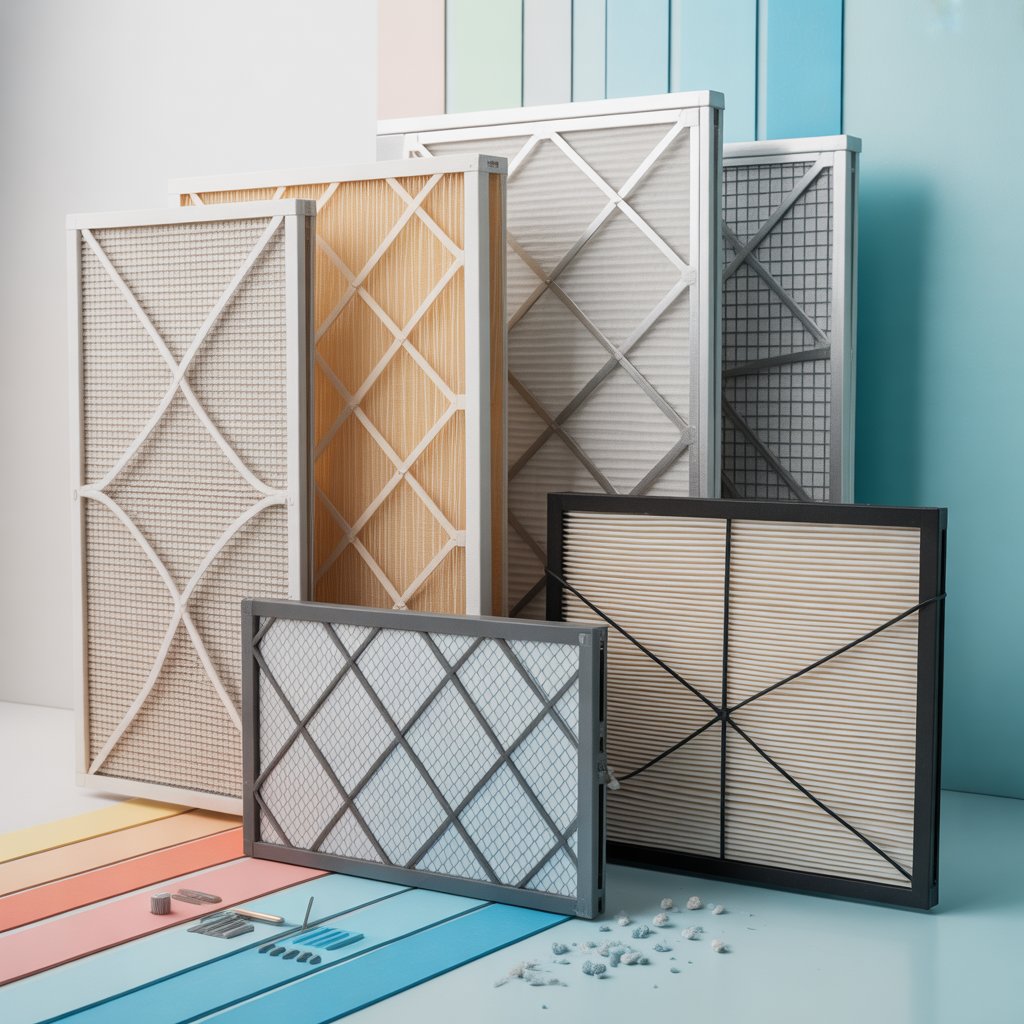
What Does MERV Rating Mean?
MERV stands for Minimum Efficiency Reporting Value. It’s a number on a scale from 1 to 16 that tells you how well an air filter traps particles floating through your HVAC system.
The rating was developed by ASHRAE, the American Society of Heating, Refrigerating, and Air-Conditioning Engineers. It’s the industry standard, which means every filter brand uses the same testing method. That makes MERV the most reliable way to compare filters across brands.
Here’s the simple version: the higher the number, the smaller the particles a filter can catch. A MERV 4 filter stops big stuff like dust bunnies and carpet fibers. A MERV 13 filter catches things you can’t even see, like bacteria and smoke particles.
The MERV Rating Chart (1–16 Explained Simply)
This table shows what each MERV level actually captures. We’ve added the plain-English version so you know what this means in your actual home.
| MERV Rating | Particle Size Captured | What It Catches | Best For |
| 1–4 | 10+ microns | Large dust, pollen, carpet fibers | Basic protection only |
| 5–8 | 3–10 microns | Mold spores, dust mites, pet dander | Most standard homes |
| 9–12 | 1–3 microns | Fine dust, lead particles, auto emissions | Homes with mild allergies or pets |
| 13–16 | 0.3–1 microns | Bacteria, smoke, virus carriers, smog | Allergy/asthma sufferers, post-COVID concerns |
| HEPA | 0.3 microns | 99.97% of all particles | Hospitals, specialty air purifiers |
HEPA filters aren’t part of the MERV system and won’t fit most residential HVAC systems. More on that below.
What MERV Rating Is Best for a Home?
Most HVAC manufacturers and the EPA recommend somewhere between MERV 8 and MERV 13 for residential homes. That range gives you good filtration without putting too much strain on your system.
Here’s how to pick yours:
MERV 8: This is the sweet spot for most average homes. It catches pet dander, dust mites, and common pollen. If you don’t have major allergy issues and your home doesn’t have air quality problems, MERV 8 does the job well.
MERV 11: A good step up if you have one pet, occasional allergy symptoms, or someone in the home who’s sensitive to dust. It captures finer particles without significantly restricting airflow.
MERV 13: Recommended for homes with allergy or asthma sufferers, multiple pets, or anyone who wants hospital-grade-adjacent filtration at home. This is also the minimum the EPA suggests if you’re trying to capture fine particles that may carry viruses.
Above MERV 13: These ratings are designed for commercial buildings and hospitals. In a standard home HVAC system, they restrict airflow so much that they can cause the system to overheat or fail. Don’t go here unless an HVAC technician confirms your system can handle it.
MERV 8 vs MERV 11 vs MERV 13 The Real Difference
People compare these three constantly, so let’s be direct about it.
MERV 8 vs MERV 11: The gap isn’t huge for most people. MERV 11 captures finer particles and things in the 1–3 micron range, like fine dust and some mold spores, that MERV 8 doesn’t touch. If you have pets or mild seasonal allergies, the upgrade is worth the extra few dollars per filter.
MERV 11 vs MERV 13: This is where things get more meaningful. MERV 13 adds capture of particles under 1 micron, including smoke, bacteria, and particles that can carry airborne viruses. If anyone in your home has asthma, COPD, or serious allergies, MERV 13 is where you want to be.
The catch with MERV 13: It’s denser, which means your system’s blower has to work harder to pull air through it. Some older or budget HVAC systems aren’t built for that resistance. If your system is older than 10–15 years, check with a technician before upgrading to MERV 13.
Can a High MERV Rating Damage Your HVAC System?
Yes and this is the part most homeowners don’t hear about.
When a filter is very dense, it creates resistance against airflow. Your HVAC blower motor has to work harder to push air through the system. Over time, that extra strain leads to:
- Higher energy bills because the motor runs harder
- Reduced airflow that leaves some rooms barely conditioned
- A frozen evaporator coil in summer because warm air can’t move across it properly
- Premature blower motor failure
This doesn’t mean you should stick with cheap filters. It means there’s a ceiling for every system. The right MERV rating for your home depends partly on what your HVAC equipment was designed to handle.
If you’re not sure, MERV 8 to 11 is the safe zone for most residential systems. Going higher than that without checking first is where problems start.
MERV Rating for Allergies and Asthma
If allergies or asthma are a real concern in your home, your filter choice genuinely matters.
Common allergy triggers, pollen, pet dander, and dust mite waste are mostly caught starting at MERV 8. For seasonal allergy sufferers, MERV 8 or 11 is usually enough.
Asthma is a different story. Asthma triggers include much smaller particles: fine dust, mold spores, smoke, and even certain bacteria. For anyone with asthma in the home, MERV 13 is the standard recommendation. It captures the microscopic irritants that lower-rated filters completely miss.
One important note: a high MERV filter only helps if you change it on schedule. A clogged MERV 13 filter provides worse air quality than a fresh MERV 8 filter. The rating on the box means nothing if the filter is choked with six months of particles.
How Often Should You Change Your Filter by MERV Rating?
Filter lifespan depends on both the MERV rating and your home’s conditions.
| MERV Rating | Typical Replacement Interval | Shorter If… |
| MERV 1–4 | Every 30 days | You have heavy dust or pets |
| MERV 5–8 | Every 60–90 days | You have pets or live on a dusty road |
| MERV 9–12 | Every 60 days | You have allergies or multiple pets |
| MERV 13+ | Every 30–60 days | You run the system heavily or have pets |
Higher MERV filters load up with captured particles faster because they’re catching more. That’s why MERV 13 filters often need changing more frequently than MERV 8 filters, not less.
Set a phone reminder. The single biggest filter mistake homeowners make is simply forgetting to change it.
MERV vs. MPR vs. FPR What’s the Difference?
If you’ve ever bought filters at a big box store, you’ve seen two other rating systems:
MPR (Micro-Particle Performance Rating) is 3M’s proprietary scale, used only on Filtrete brand filters. MPR 300 roughly equals MERV 7. MPR 1500 is close to MERV 12. MPR 2800 is near MERV 14.
FPR (Filter Performance Rating) is Home Depot’s scale for their store-brand filters. It runs from 4 to 10 and loosely mirrors MERV 8 to 13.
The takeaway: MERV is the only independent, industry-standard rating. When in doubt, look for MERV on the packaging rather than a proprietary number. It’s the only system you can trust across brands.
MERV vs. HEPA: Why You Probably Can’t Use a HEPA Filter in Your HVAC
HEPA filters capture 99.97% of particles 0.3 microns or larger. They’re the gold standard in air filtration, and they’re used in hospitals, clean rooms, and portable air purifiers.
But here’s the problem: HEPA filters are so dense that residential HVAC systems can’t pull enough air through them. Installing a true HEPA filter in a standard home air handler would be like breathing through a pillow; the system would essentially starve for airflow.
HEPA works well in standalone portable air purifiers because those units are specifically designed for that level of resistance. For whole-home HVAC filtration, MERV 13 is the practical ceiling for most systems.
If you want HEPA-level protection for your whole home, the right solution is a dedicated whole-home air purifier installed inline with your HVAC, not a filter swap.
What MERV Rating Should I Choose? (Quick Decision Guide)
Use this as your final answer:
- Basic home, no pets, no allergies → MERV 8
- One or two pets, mild allergies → MERV 11
- Serious allergies, asthma, or multiple pets → MERV 13
- Post-construction or heavy dust → MERV 11–13 temporarily, then step down
- Older HVAC system (10+ years) → Don’t exceed MERV 11 without a tech check
- Want maximum protection → MERV 13 + portable HEPA purifier in key rooms
How Your MERV Rating Connects to HVAC System Health
Your HVAC filter and your HVAC system are in a constant relationship. The filter protects the system; it keeps dust and debris off the blower, coils, and heat exchanger. But if the filter restricts airflow too much, it becomes the thing damaging the system instead.
This is exactly why an annual HVAC tune-up includes a filter inspection. A technician can tell you whether your current filter is the right fit for your equipment and whether you’re leaving air quality gains on the table by going too low or putting unnecessary strain on your system by going too high.
If you’re in the Richardson or North Texas area and not sure what your system can handle, a quick inspection solves that question for good.
The right filter makes a real difference but only when it’s paired with a system that’s running the way it should. Dirty coils, weak blower motors, and duct leaks all undercut whatever filter you choose.
If you’re in the greater Dallas Fort Worth area and want to make sure your HVAC system is actually delivering the air quality your filter promises, Home Right technicians can take a look. A quick system check shows you exactly what’s happening inside and what isn’t.
