
Septic tank pumping is one of the most important and most overlooked maintenance tasks for California homeowners on private septic systems. This guide explains what a septic tank is, which California cities and counties rely on them, what pump outs realistically cost in 2026, when to call for emergency septic pumping, and how to protect your system for decades.
If your home is not connected to a city sewer line, every gallon of water you flush, wash, and drain flows directly into your septic system. Skip pumping too long, and a $400 routine service becomes a $20,000 drain field replacement. This guide is built for California homeowners who want accurate, unbiased information covering everything from system basics to real cost data across California cities.
| $300–$600
National avg. pump out cost (2026) |
$500–$800
Typical costs in Bay Area & Los Angeles |
| 3–5 Years
Recommended pumping interval |
1 in 4
U.S. homes on private septic systems |
What Is a Septic Tank?
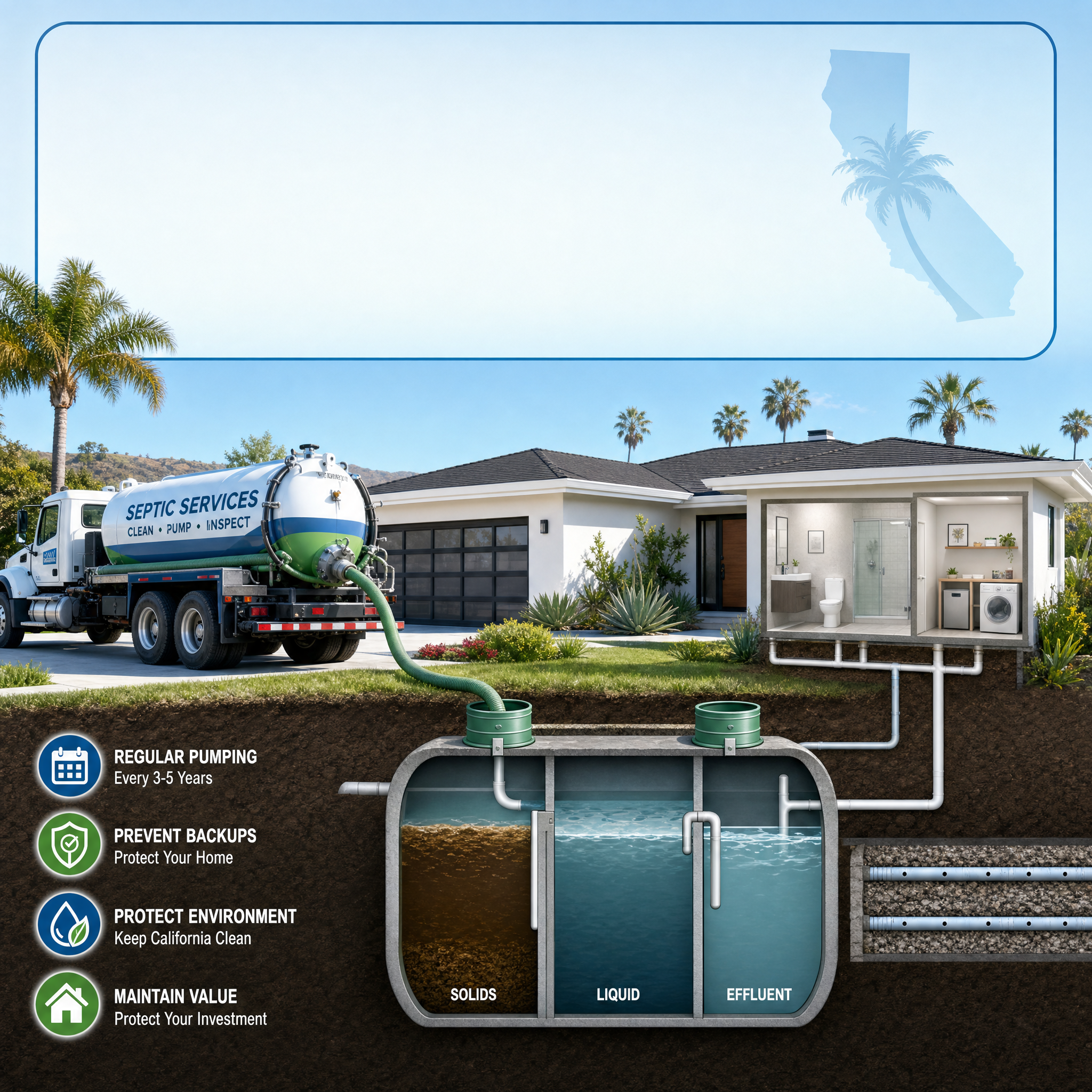
A septic tank is an underground, watertight chamber typically made of concrete, fiberglass, or polyethylene that collects all the wastewater leaving your home. Every toilet flush, shower drain, kitchen sink, and laundry cycle sends water into this buried tank. Inside, a three-layer separation process takes over:
- Sludge layer Heavy solid waste settles to the bottom and is slowly broken down by anaerobic bacteria.
- Effluent layer Partially treated liquid wastewater occupies the middle of the tank.
- Scum layer Oils, grease, and lightweight solids float to the surface.
The clarified effluent in the middle zone flows through an outlet baffle into a drain field (also called a leach field), where soil naturally filters remaining contaminants. What cannot leave the sludge and scum gradually accumulates. When those layers get too thick, they impair wastewater treatment. That is when septic tank pumping becomes necessary.
| HOW IT DIFFERS FROM A CITY SEWER
Municipal sewer systems transport wastewater to a centralized treatment plant maintained by local government. Septic systems treat wastewater on-site. The homeowner owns, operates, and is entirely responsible for maintenance including the costs of pumping, inspection, and repair. |
Parts of a Complete Septic System
Most California homes use a conventional septic system, which includes the septic tank, an inlet pipe, an outlet baffle or filter, a distribution box, and the drain field. Aerobic treatment units, mound systems, and chamber systems exist as alternatives for properties with difficult soil conditions, but conventional gravity-fed systems remain the most common. Septic tanks typically hold 750 to 1,500 gallons, though larger homes may have 2,000-gallon or multi-compartment tanks. Tank size directly affects how often pumping is needed and what a pump out will cost.
Where Are Septic Tanks Used in California?
California’s geography and development patterns create a patchwork of sewer and septic coverage. Dense urban cores downtown Los Angeles, San Francisco, San Jose, and Sacramento’s core neighborhoods are almost entirely sewered. Move outside those urban cores, and private septic systems become the norm very quickly.
Counties and Areas With High Septic System Concentration
- Humboldt County: Rural Northern California, including Arcata and Fortuna, relies heavily on private septic systems.
- Shasta County: Greater Redding area and surrounding rural communities, including much of unincorporated Shasta County.
- El Dorado County: Sierra Nevada foothills including Placerville and Pollock Pines, with a large concentration of septic-dependent homes.
- Riverside County (unincorporated): Rural communities outside Palm Springs, Temecula, and Coachella Valley fringe areas.
- San Diego County (unincorporated): Communities like Ramona, Valley Center, and Julian are predominantly septic-dependent.
- Central Valley (Fresno, Tulare, Kings, Madera): Agricultural and rural residential properties throughout the San Joaquin Valley, with increasing regulatory scrutiny over groundwater contamination.
- Sonoma and Napa counties: Wine country properties and rural estates, particularly on vineyard parcels and rural lots.
- Santa Cruz and Monterey counties: Coastal rural communities and mountain areas like Ben Lomond and Corralitos, subject to additional coastal environmental protections.
| CALIFORNIA REGULATORY NOTE
California’s septic regulations are overseen by the State Water Resources Control Board under the Onsite Wastewater Treatment Systems (OWTS) Policy. Local county environmental health departments enforce rules on the ground. Coastal properties face additional requirements under the California Coastal Act, including stricter setbacks and enhanced treatment standards. Always verify current permit requirements with your county before pumping, repairing, or replacing any part of your system. |
When Does a Septic Tank Need Pumping?
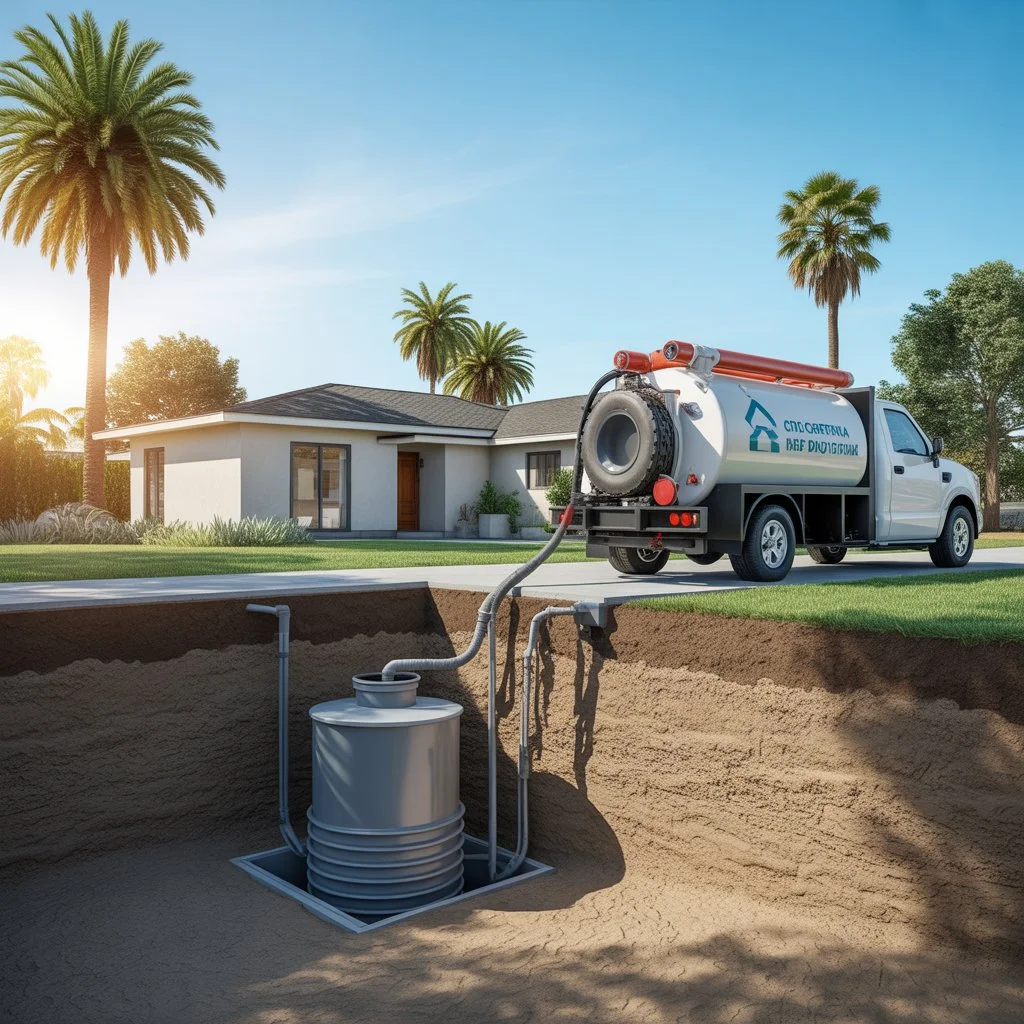
The U.S. Environmental Protection Agency recommends pumping when the bottom sludge layer rises to within 12 inches of the outlet tee, or the top scum layer drops to within 6 inches. For most households, this translates to pumping every 3 to 5 years, but several factors move that schedule forward.
Factors That Increase Pumping Frequency
- Household size: More occupants means more daily wastewater. A family of six with a 1,000-gallon tank may need pumping every 2 years instead of 3.
- Garbage disposal use: Grinding food waste into the drain significantly increases the solids load entering your tank.
- Laundry habits: Running multiple large laundry loads in a single day can overwhelm the system. Spread loads throughout the week.
- Antibacterial products: Excessive use of antibacterial soaps, bleach, and chemical drain cleaners kills the beneficial bacteria in the tank, causing faster sludge buildup.
- Tank age: Older concrete tanks may have degraded baffles or seams that allow sludge to migrate into the drain field, requiring more frequent attention.
Warning Signs Your Tank Needs a Pump Out Now
- Slow-draining sinks, showers, and toilets throughout the house, not just one fixture
- Gurgling sounds from drains after flushing
- Foul sewage odors near the tank location or drain field
- Unusually lush, green, or wet patches of grass directly above the drain field
- Sewage backing up into the lowest drains in the home a sign of an overloaded system
- Standing water or muddy soil above the tank or drain field with no recent rainfall
WARNING: DO NOT WAIT FOR THESE SIGNS By the time sewage is backing up into your home or surfacing in your yard, the system is already failing. Drain field damage the result of prolonged septic overloading costs between $5,000 and $30,000 to repair or replace. Scheduling regular pumping on a 3 to 5 year cycle prevents this outcome entirely.
Septic Tank Pumping Costs in 2026 National Average and California Breakdown
Understanding the realistic cost of septic tank pumping helps homeowners budget accurately and spot inflated quotes. California consistently ranks among the most expensive states for septic services, driven by higher labor costs, stricter environmental disposal regulations, and geographic factors in coastal and mountainous areas.
National average: A standard septic tank pump out in 2026 ranges from $300 to $600, with a national average of approximately $425 for a 1,000 to 1,500-gallon residential tank with an accessible lid and no complications.
California City-by-City Cost Comparison
City / Region Typical Range Key Cost Drivers San Francisco Bay Area $500 – $800 High labor costs, strict disposal regulations, difficult terrain Los Angeles Metro $450 – $750 (avg. ~$600) Wide variation by submarket; coastal disposal fees run high San Diego (unincorporated) $461 – $603 (avg. ~$530) Long drives to rural properties; environmental permit compliance Sacramento Area $458 – $601 (avg. ~$530) Moderate; local pros recommend pumping before summer Riverside / Inland Empire $350 – $550 Lower labor vs. coastal; accessibility varies widely Fresno / Central Valley $300 – $480 Lower overhead; rural properties can face access challenges Humboldt / Shasta County $350 – $600 Few providers; longer drive times in remote areas add cost Santa Barbara / Ventura $450 – $750 Coastal regulations raise compliance costs; limited providers Cost by Tank Size: Quick Reference
Tank Size National Range California Range Typical Household 750–1,000 gal $250 – $400 $300 – $550 1–2 bedrooms 1,000–1,500 gal $325 – $550 $400 – $700 3–4 bedrooms 1,500–2,000 gal $500 – $700 $600 – $900 5+ bedrooms 2,000+ gal $700+ $850+ Large homes / commercial What Causes Cost Variation Within the Same City?
- Tank size: A 750-gallon tank may cost as little as $250; a 2,000-gallon tank can run $700 or more. Larger tanks take longer to pump and create higher disposal loads.
- Tank accessibility: If the lid is buried, technicians charge additional labor to locate and excavate it. Installing a septic riser ($200–$500) saves $50–$100 on every future pumpout.
- Years since last pumping: Tanks not pumped in 10+ years may contain compacted sludge, requiring extended pump time and higher disposal fees.
- Disposal facility distance: In coastal California, disposal fees can exceed $150 per load. Haulers pass those costs on to homeowners.
Scheduled vs. emergency: A weekday appointment during regular hours is always the lowest-cost option. Emergency or weekend service adds 50% to 100% to the final bill.
Emergency Septic Pumping What to Know
Emergency septic pumping becomes necessary when a system backs up without warning — sewage surfacing in the yard, drains refusing to clear, or waste backing into the lowest fixtures of the home. These situations do not respect business hours, and the cost reflects that reality.
Emergency pump-out service in California typically costs 50% to 100% more than scheduled service. In major metro areas, weekend and after-hours emergency calls can run $700 to $1,500 or more. Some companies charge a flat emergency dispatch fee on top of the standard pump rate; others apply a percentage surcharge on the total job.
What to Do During a Septic Emergency
- Stop all water use: Every flush, sink, and shower adds to an already overloaded system.
- Keep people and pets away: From any area where sewage has surfaced in the yard.
- Do not open the tank lid: Raw sewage contains dangerous pathogens and toxic gases. Leave this to licensed professionals.
- Call a licensed contractor: Clearly describe the situation so they can dispatch the right equipment.
- Document with photos: Before service begins, in case you need to file an insurance claim for secondary damage.
MOST EMERGENCIES ARE PREVENTABLE The overwhelming majority of emergency septic situations happen because routine pumping was deferred too long. A system last pumped five, seven, or ten years ago is running on borrowed time. Scheduling a routine pump out every three to five years virtually eliminates the risk of an unplanned, expensive emergency.
How to Extend the Life of Your Septic System
Septic tank pumping is the most important maintenance task, but it is not the only one. Smart daily habits and periodic inspections keep the system working at full efficiency and significantly extend the life of an expensive drain field.
Daily Habits That Protect Your System
- Never flush anything other than waste and toilet paper: wipes labelled ‘flushable’, paper towels, feminine hygiene products, and medications do not break down in a septic tank.
- Spread laundry loads throughout the week: Washing four loads in a single day pushes partially treated effluent into the drain field prematurely.
- Avoid pouring grease down the drain: Fats and cooking oils solidify in the tank and rapidly build up the scum layer.
- Minimise antibacterial soap and chemical drain cleaner use: These products kill the microbial ecosystem inside the tank that breaks down solids.
- Do not park or build over the drain field: compacted soil prevents wastewater from percolating correctly and can crush distribution pipes.
- Redirect roof gutters away from the drain field: Saturated drain fields cannot treat effluent, and excess water speeds system failure.
Scheduled Maintenance to Budget For
- Pump out every 3 to 5 years: The non-negotiable baseline of septic system care.
- Inspection every 1 to 3 years: A licensed inspector checks baffles, outlet filters, structural integrity, and drain field health. Cost: $250–$1,175.
- Outlet filter cleaning or replacement: Many modern systems have an effluent filter that should be cleaned at each pump out.
- Riser installation: A one-time upgrade of $200–$500 that saves labor costs on every future service visit.
What to Look for in a Septic Pumping Company
Not all septic service companies operate with the same standards. In California, septic tank pumping is a regulated activity requiring proper licensing and approved disposal methods. Hiring an unlicensed contractor risks illegal waste dumping, potential environmental fines, and substandard service.
Verification Checklist Before Hiring
- State licensing: Ask for the contractor’s California Contractors State License Board (CSLB) license number or county-issued sanitation hauler permit. Both are verifiable online.
- Proof of insurance: General liability insurance protects your property if something goes wrong during the job.
- Certified disposal: Ask where they take the waste. Legitimate haulers use licensed waste receiving facilities. Reluctance to disclose disposal locations is a red flag.
- Written estimate before work begins: A reputable company provides a clear, itemized quote. Verbal estimates that balloon at billing are a common complaint.
- Reviews and references: Check Google, Yelp, and the Better Business Bureau for patterns of complaints about hidden fees or missed appointments.
- Local knowledge: A contractor familiar with your county’s specific regulations is less likely to create compliance problems for your property.
2026 Trends in Septic System Care
The septic service industry is evolving in response to both technology and tightening California environmental regulations. Staying aware of these trends helps homeowners make forward-looking maintenance decisions.
- Real-time septic monitoring: Smart sensor systems now allow homeowners to track sludge and scum levels via a smartphone app, alerting you when pumping is actually needed. Systems range from $300 to $800 installed.
- Aerobic treatment units: As counties tighten nitrogen and pathogen limits particularly in the Central Valley and coastal zones — advanced treatment systems that use aerobic bacteria are increasingly required for new installations and replacements.
- Online permitting and digital records: Several California counties now offer digital inspection records and online permit applications, making it easier to track maintenance history and verify compliance when selling a home.
- Water recycling pressure: California’s drought management policies are pushing interest in graywater systems that divert laundry and sink water from the septic load, extending pump-out intervals and reducing drain field stress.This guide was researched and written by the editorial team at Home right Inc, an information resource dedicated to helping California homeowners make confident, informed decisions about home maintenance, including plumbing, septic systems, HVAC, and structural care. Our content is reviewed for accuracy against current EPA guidelines, California State Water Resources Control Board policy, and verified local contractor pricing data.
