California homeowners face a unique challenge scorching summers, chilly winter nights in foothill and inland communities, sky-high electricity rates, and one of the nation’s most ambitious clean-energy mandates. A hybrid heat pump system solves all four problems at once. By pairing an electric heat pump with a gas furnace backup, this dual-fuel technology automatically chooses the most efficient fuel source for every moment of the year, delivering whole-home comfort without sacrificing reliability or your monthly budget.
In this guide, you will learn exactly how a heat pump hybrid system works, why it outperforms single-fuel alternatives for most California climates, what real-world savings look like, and how to navigate the substantial federal and state rebate programs that make the investment more affordable than ever in 2026.
What Is a Hybrid Heat Pump System?
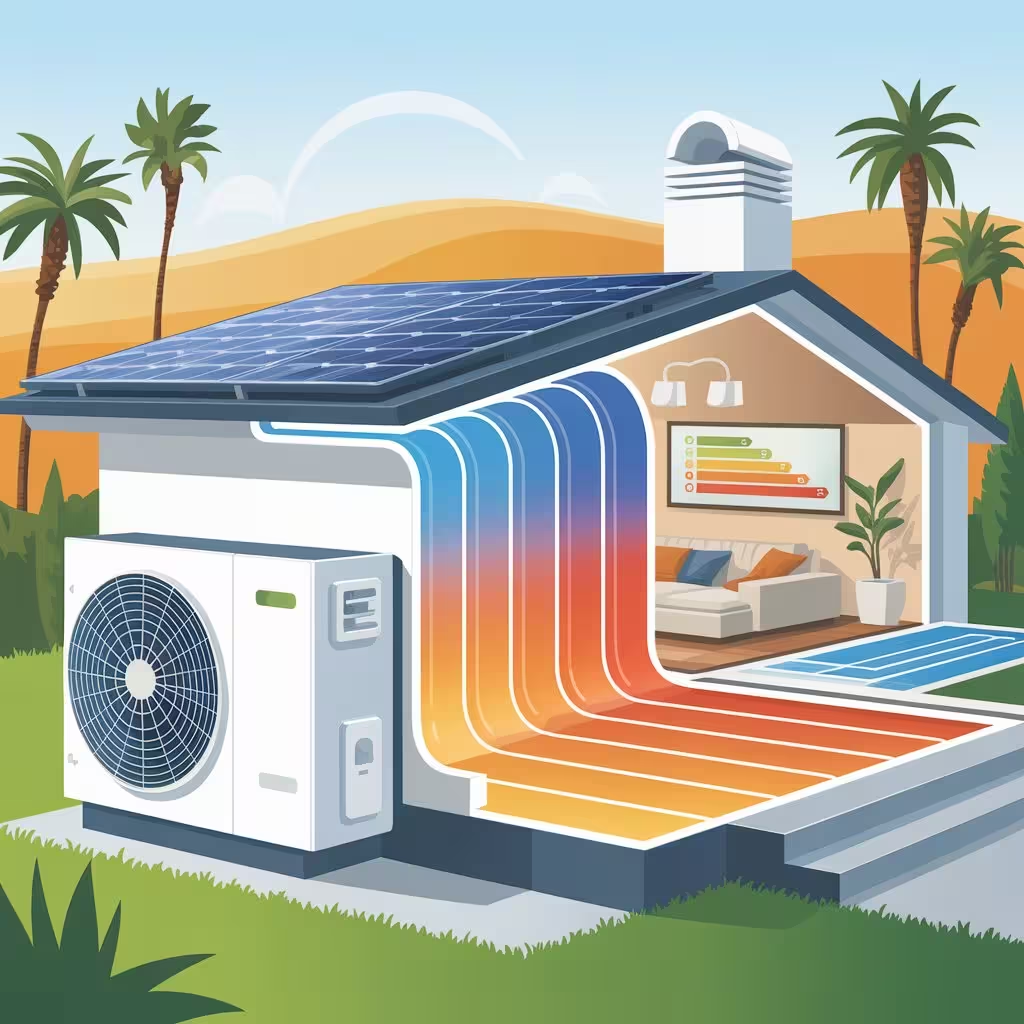
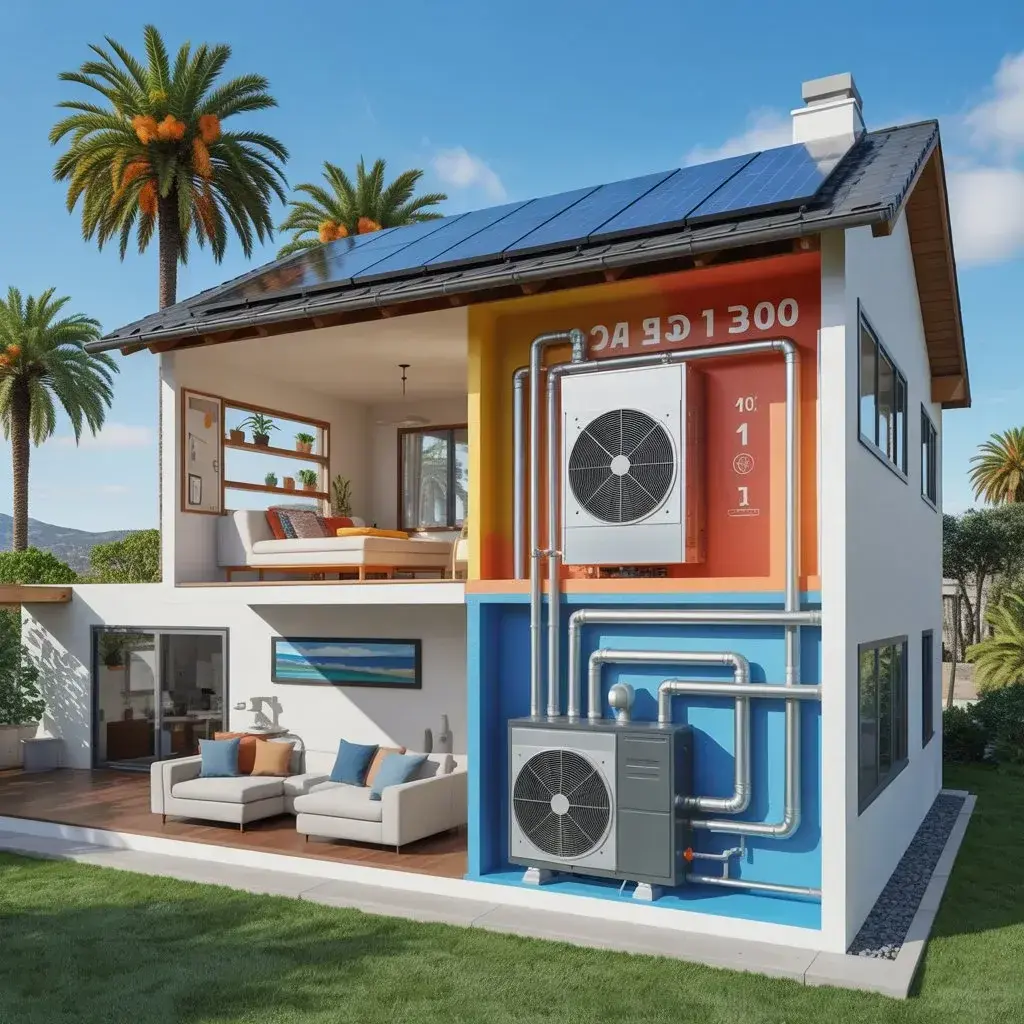
A hybrid heat pump system is a dual-fuel heating and cooling solution that combines an air-source heat pump, which moves heat rather than generating it, with a conventional gas or propane furnace that kicks in when outdoor temperatures make electricity less economical or the heat pump less effective. The two components share a single air handler, a single set of ductwork, and a smart thermostat that decides which fuel source to use at any given moment.
Think of it as a car that switches between an electric motor and a gasoline engine. On a mild California afternoon at 50°F, the heat pump runs almost silently at a coefficient of performance (COP) of 3.0 or higher, meaning it delivers three units of heat for every unit of electricity consumed. When temperatures drop to the low 30s in a Sacramento Valley winter or a high-desert cold snap, the gas furnace activates seamlessly, maintaining indoor comfort without demanding an inefficient electric draw.
Core Components of a Heat Pump Hybrid System
- Heat Pump: Air-source heat pump outdoor unit (typically 14–20 SEER2)
- Gas Furnace: Existing or new high-efficiency gas or propane furnace
- Air Handler: Compatible variable-speed or two-stage air handler
- Smart Thermostat: Dual-fuel smart thermostat that monitors outdoor temperatures and fuel costs in real time
- Ductwork: Standard refrigerant lines and existing ductwork (often compatible)
A hybrid heat pump system is not a replacement for your furnace; it is an intelligent partnership between two proven technologies, calibrated for your climate and your utility rate structure.
Why Hybrid Heat Pump Systems Make Sense for California
California is not a single climate. Los Angeles coastal neighbourhoods rarely dip below 45°F in winter, while Fresno and Redding can see extended stretches below freezing. The Sierra Nevada foothills experience genuine cold snaps that would challenge a standalone heat pump. A hybrid system is engineered for exactly this variability.
California’s Dual Energy Challenge
The state’s time-of-use (TOU) electricity rates mean the cost of running an all-electric heat pump can spike dramatically during winter evenings. A heat pump hybrid system responds to these rate signals automatically. During off-peak hours, the heat pump runs. When electricity prices rise above the programmed cost threshold, the thermostat switches to gas a form of passive demand response that lowers your bill without any manual intervention.
Climate Zones and Switchover Points
The switchover temperature — the outdoor temperature below which the gas furnace takes over from the heat pump — is typically set between 30°F and 40°F depending on your location and your utility’s fuel costs. In most California cities, the heat pump handles the vast majority of heating hours throughout the year.
- San Diego and coastal Southern California: heat pump active 95% of heating hours
- Los Angeles Basin inland areas: heat pump active 88% of heating hours
- Sacramento Valley and Bay Area: heat pump active 80% of heating hours
- Fresno, Bakersfield, inland valleys: heat pump active 72% of heating hours
- Foothill communities above 2,000 ft: heat pump active 60% of heating hours
Even in California’s coldest residential areas, a properly sized hybrid heat pump system handles the majority of annual heating load electrically, while the gas furnace manages peak-demand cold snaps with none of the efficiency penalties of a standalone electric system.
How a Heat Pump Hybrid System Works: Step by Step
Understanding the operating logic of a dual-fuel system removes the guesswork and helps you have an informed conversation with your HVAC contractor.
- Step 1: Temperature Sensing: The smart thermostat reads the outdoor temperature and compares it to the programmed switchover point.
- Step 2: Heat Pump Mode: If the outdoor temperature is above the switchover point, the heat pump runs in heating mode, extracting ambient heat from outdoor air and moving it indoors.
- Step 3: Cooling Mode: For cooling in summer, the heat pump reverses its refrigeration cycle and operates as a standard central air conditioner.
- Step 4: Gas Furnace Backup: When outdoor temperatures fall below the switchover threshold, or when the heat pump cannot satisfy the thermostat’s call for heat within a reasonable time, the gas furnace activates.
- Step 5: Cost-Based Logic: The thermostat continuously monitors real-time energy costs on advanced systems, overriding the temperature-only logic when electricity rates spike unexpectedly.
- Step 6: Shared Air Distribution: Both systems share the same air handler and ductwork, so airflow, filtration, and humidity management remain consistent regardless of which fuel source is active.
Hybrid Heat Pump System vs. Other Options: A Direct Comparison
Before choosing any HVAC upgrade, homeowners deserve a clear, honest side-by-side comparison. The table below uses real-world performance data relevant to California conditions.
Feature Standard Heat Pump Gas Furnace Only Hybrid Heat Pump System Winter Efficiency Drops below 35°F Consistent all temps Best of both — switches automatically Summer Cooling Yes No (AC needed) Yes Fuel Type Electricity only Gas only Electricity + Gas backup Upfront Cost Moderate Moderate Higher (long-term ROI) Annual Energy Savings 20–40% Baseline Up to 50% vs. gas alone Rebate Eligibility Yes Limited Yes (federal + CA state) Cold Climate Performance Variable Strong Strong The comparison above illustrates why a hybrid heat pump system consistently outperforms both all-electric and all-gas options for California homeowners who want performance, savings, and resilience in a single system.
Energy Savings and Cost Analysis
California utility rates are among the highest in the continental United States, which actually strengthens the case for a hybrid system. Because the heat pump operates with a COP of 2.5 to 4.5 across most California temperature ranges, it delivers more heat per energy dollar than a gas furnace in mild conditions and the gas backup takes over only when that math inverts.
Projected Annual Savings for California Homeowners
- Average homeowner replacing a gas-only system: savings of $600 to $1,200 per year on energy bills
- Homeowners in mild coastal climates (LA, San Diego, Santa Barbara): savings skewed toward the higher end
- Homes with existing solar panels: hybrid system amplifies daytime self-consumption, pushing effective savings to $1,400+ annually
- Homeowners with time-of-use electricity plans benefit from automated rate-aware switching
Return on Investment Timeline
After available rebates and tax credits, a typical heat pump hybrid system installation nets out at $4,000 to $7,000 in California (compared to a full replacement cost of $8,000 to $14,000 before incentives). At median California energy savings, the payback period falls between four and seven years — well within the 15 to 20-year operational life of the equipment.
California Rebates and Federal Tax Credits for Hybrid Heat Pump Systems
2026 remains an excellent year to invest in a hybrid heat pump system in California. Multiple overlapping incentive programs reduce upfront costs substantially.
Federal Incentives
- Energy Efficient Home Improvement Credit (25C): 30% of project cost, up to $2,000 for qualifying heat pump systems
- High-Efficiency Electric Home Rebate Act (HEEHRA): up to $8,000 for low-to-moderate income households, income-qualified
California State Incentives
- TECH Clean California Program: statewide rebates of $1,000 to $3,000 depending on income tier and climate zone
- Self-Generation Incentive Program (SGIP): additional credits when paired with battery storage
- Utility-specific rebates: PG&E, SCE, SDG&E, and SMUD each offer their own layered rebate structures
Many California homeowners combine federal, state, and utility rebates to cover 40% to 60% of the total installed cost of a hybrid heat pump system. Always consult a licensed contractor who is certified under the TECH Clean California program to confirm eligibility before purchasing.
Is Your Home Ready for a Hybrid Heat Pump System?
A hybrid upgrade works best when a few baseline conditions are met. The good news is that most California homes built after 1980 already satisfy the majority of these requirements.
Ideal Candidates for a Heat Pump Hybrid System
- Homes already heated by a forced-air gas furnace with ducted distribution
- Households with a natural gas or propane connection they want to retain as a backup
- Homeowners who plan to install solar or already have PV panels
- Properties in California climate zones 2 through 16 (covers the vast majority of the state)
- Homeowners who want air conditioning added without a separate system
What to Evaluate Before Installation
- Duct condition and leakage rate ducts with more than 15% leakage should be sealed first to maximize savings
- Electrical panel capacity most hybrid systems need a 240V, 30–40 amp dedicated circuit for the outdoor heat pump unit
- Attic and wall insulation improving insulation reduces the heating load, which in turn allows a smaller and less expensive heat pump
- Thermostat compatibility dual-fuel thermostats require specific wiring; your contractor will assess this during the site survey
Installation Process: What to Expect
A professional hybrid heat pump system installation typically unfolds over one to two days, minimizing disruption to your household.
- Day 1 Morning: Site assessment and load calculation to size the heat pump correctly for your home’s square footage, insulation level, and climate zone
- Day 1 Afternoon: Outdoor unit placement, refrigerant line installation, and connection to the existing air handler and furnace
- Day 2 Morning: Dual-fuel thermostat installation and programming of the switchover temperature and cost-based logic
- Day 2 Afternoon: System commissioning, refrigerant charge verification, airflow balancing, and a complete walkthrough of controls and settings with the homeowner
Most reputable California HVAC contractors certified through TECH Clean California will also assist with rebate paperwork as part of the installation package, removing one of the most common friction points for homeowners.
Maintenance and Long-Term Performance
A hybrid heat pump system requires modest, predictable maintenance that is no more demanding than caring for a conventional HVAC system. In fact, because the heat pump handles most of the heating load, the gas furnace runs far fewer annual hours than it would as a standalone system, extending burner and heat exchanger life significantly.
Annual Maintenance Checklist
- Replace or clean air filters every 30 to 90 days depending on household dust and pet dander levels
- Clear debris from the outdoor heat pump unit at the start of each season
- Schedule a professional tune-up each fall that covers refrigerant charge, electrical connections, and thermostat calibration
- Have the gas furnace burners, heat exchanger, and igniter inspected annually by a licensed technician
- Test the switchover function by temporarily lowering the setpoint temperature to verify both systems activate correctly
Environmental Impact and California’s Clean Energy Goals
California has committed to carbon neutrality by 2045. A hybrid heat pump system is one of the most practical tools available to residential homeowners right now, years before the grid is fully decarbonised and before all-electric heat pumps can reliably serve every California climate zone without backup.
By shifting the majority of home heating to electricity — and sourcing more of that electricity from renewables each year as California’s grid continues to clean up, a heat pump hybrid system produces substantially fewer lifecycle greenhouse gas emissions than a gas-only furnace. The California Air Resources Board estimates that widespread adoption of dual-fuel hybrid systems could reduce residential gas consumption by 20% to 35% statewide by 2035.
Conclusion: The Smart Path Forward for California Homeowners
A hybrid heat pump system is not a compromise; it is a deliberate, engineer-designed solution built for climates exactly like California’s, where weather variability, fuel cost fluctuations, and aggressive clean-energy policy create conditions that favour neither a purely electric nor a purely gas approach.
By choosing a heat pump hybrid system, you gain year-round comfort with summer cooling and winter heating in a single integrated system, lower energy bills through intelligent fuel-source switching; resilience against grid disruptions or extreme cold, access to the most generous federal and state incentives available to California homeowners today; and a meaningful reduction in your household’s carbon footprint one that compounds automatically as the California grid gets cleaner every year.
The technology is proven, the economics are compelling, and the support infrastructure of trained contractors and robust rebate programmes in California has never been stronger. Whether you are replacing an ageing furnace, adding air conditioning for the first time, or pursuing a broader whole-home efficiency strategy, a hybrid heat pump system belongs at the top of your consideration list.
Ready to Upgrade Your Home Comfort?
Home right Inc. specialises in expert hybrid heat pump system installations across California. Our certified technicians help you choose the right system, maximise your rebates, and enjoy year-round comfort.
Contact Homeright Inc. Today | Free Consultation | Licensed & Insured | Serving All of California