
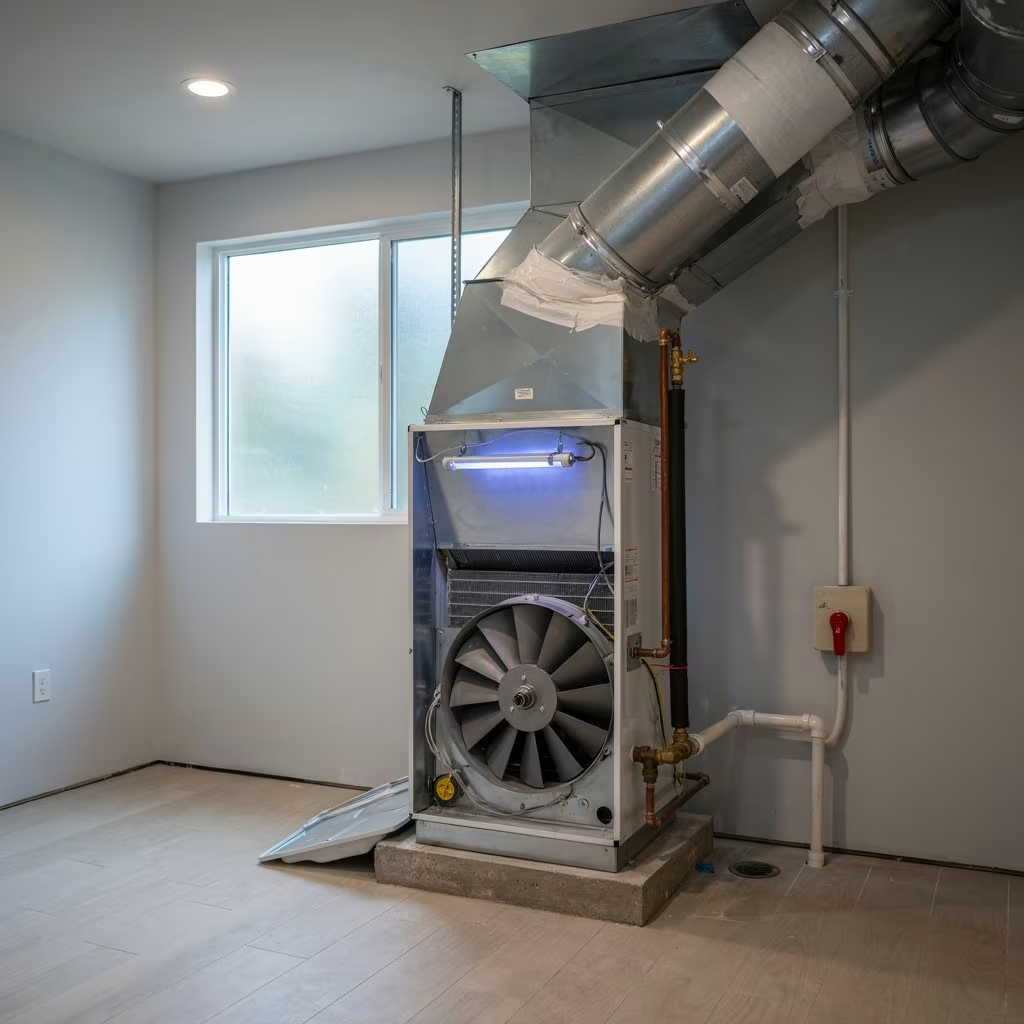
If you’ve searched “UV-C HVAC air purifier” more than once this year, you’re not alone. Between wildfire smoke rolling into cities that never used to worry about it, and a couple of rough flu seasons that made everyone a little more air-conscious, indoor air quality has quietly become one of the most-asked-about home upgrades of 2026. Somewhere in that search, you’ve probably run into a sales pitch and a science article that seem to disagree with each other. One says UV-C light sterilizes almost everything passing through your ductwork. The other says it’s mostly marketing dressed up as medicine.
Both are half right, which is exactly why this topic is so confusing.
I’ve spent time going through manufacturer specs, HVAC contractor installation guides, and the peer-reviewed research behind ultraviolet germicidal irradiation (UVGI) to put together a straight answer on whether a UV-C HVAC air purifier is worth installing: what it actually does, where it genuinely helps, where it falls short, and what a UV-C HVAC air purifier should cost you based on your home, your climate, and your reason for wanting one in the first place. No sales pitch, no fear-mongering just what a homeowner needs to make a decision they won’t regret in six months.
What Is a UV-C HVAC Air Purifier and How Does It Actually Work?
At its core, a UV-C HVAC air purifier is a small lamp, usually mounted inside your air handler or ductwork, that emits ultraviolet light at a wavelength around 254 nanometres. That wavelength sits inside the UV-C band (100–280 nm), which is short enough to disrupt the DNA and RNA of microorganisms bacteria, mold spores, and some viruses as they drift past the bulb.
Here’s the part most product pages leave out: UV-C light doesn’t “kill” pathogens the way a disinfectant wipe does. It damages their genetic material so they can’t replicate. Some organisms are inactivated almost instantly; others need much longer exposure than the half-second or so that air spends passing a duct-mounted lamp. That distinction between inactivation versus removal and the exposure time it actually takes is the single biggest thing that separates an honest answer from a marketing one, and it’s where a lot of the “Does UV HVAC work?” debate actually comes from.
Sunlight uses the same basic mechanism to fade fabric and damage skin cells over years of exposure. Hospitals use a concentrated, controlled version of it to disinfect operating rooms between surgeries, with contact times measured in minutes, not milliseconds. In practical terms, a UV-C HVAC air purifier is a scaled-down, always-on version of that same hospital-grade principle, engineered to work continuously in the background rather than in a single high-dose burst.
The Two Types of UV Lights Used in HVAC Systems
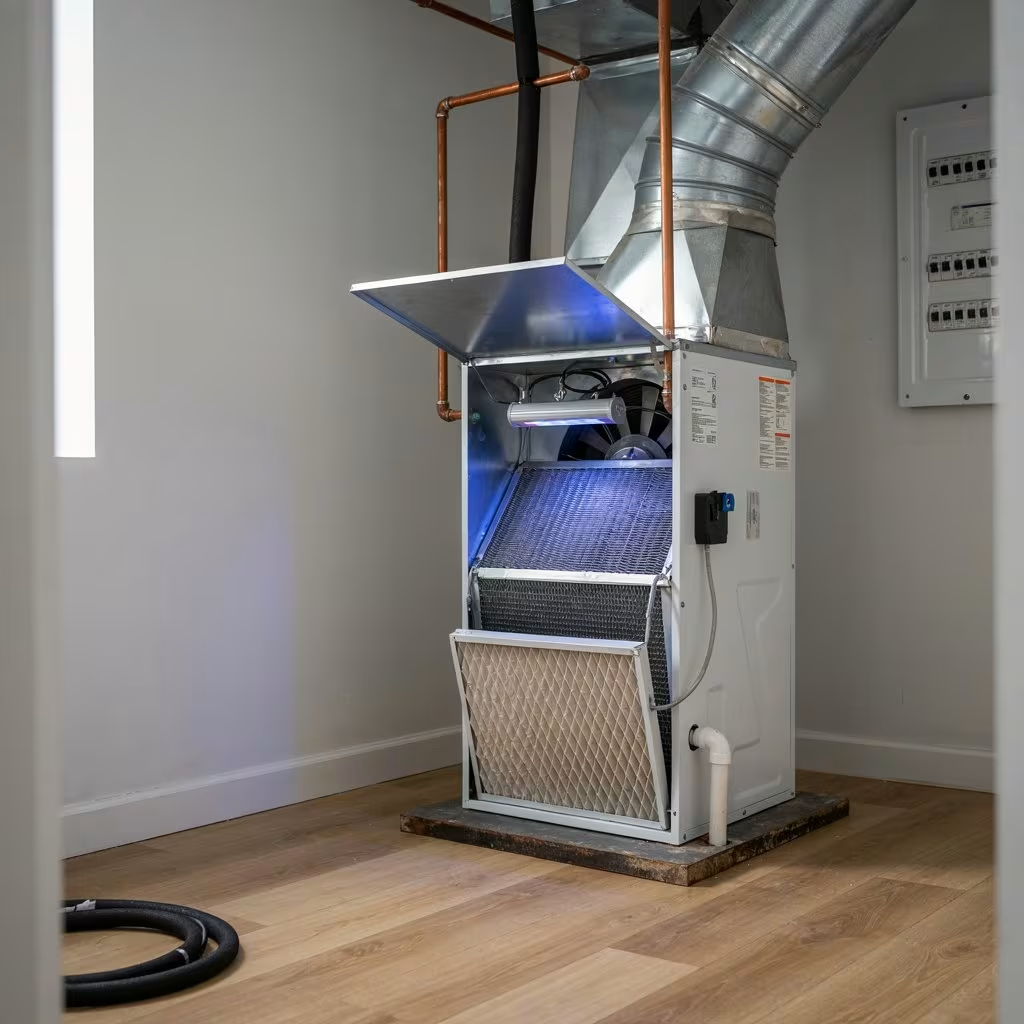
Not all UV-C HVAC air purifier setups do the same job. Contractors generally install one of two configurations, and picking the wrong one is the most common regret homeowners report after installation.
Coil sterilization lights sit directly above or beside the evaporator coil and run continuously, 24 hours a day, independent of whether your blower is on. Their job isn’t primarily to clean the air you breathe; it’s to stop mould, mildew, and bacterial slime from colonizing the coil, which is cold, wet, and dark for most of the cooling season. A dirty coil restricts airflow, drags down efficiency, and is one of the more common causes of musty-smelling supply air.
Air (duct) sterilization lights are mounted in the return duct and wired to run only when the blower operates. Because they treat the moving airstream rather than a fixed surface, this is the configuration most people actually mean when they picture a whole home UV air purifier — one system, installed once, treating air for the entire house rather than a single room.
Some installations combine both, which contractors typically recommend for households dealing with chronic mold sensitivity, older ductwork, or a coil that’s fouled up in the past. A single coil light runs $150–$400 installed; a full duct-mounted UV-C HVAC air purifier system for whole-house coverage runs $400–$900 depending on duct configuration and bulb count.
Does UV HVAC Work? What the Research Actually Says
This is where most articles either oversell or completely dismiss the technology. The honest answer sits in the middle, and it depends heavily on what you’re trying to eliminate.
Here’s how a UV-C HVAC air purifier holds up against the three things people usually buy one for.
On mold and coil buildup, the evidence is solid. Peer-reviewed studies on ultraviolet germicidal irradiation in air-handling units have consistently shown meaningful reductions in fungal growth on coils exposed to continuous UV-C. This is the strongest, most well-documented use case for HVAC UV lighting, and it’s the one HVAC manufacturers stand behind with the least hedging.
On airborne bacteria and viruses, results are real but conditional. Laboratory testing shows that different organisms require very different exposure doses — a flu virus or E. coli can be inactivated in roughly six seconds of concentrated exposure, while more resilient organisms like Aspergillus mold spores can take half a minute or longer. The catch is that air typically spends well under a second passing a duct-mounted UV lamp at normal blower speeds. That mismatch between contact time and required dose is the core reason some public health researchers caution against treating an in-duct UV-C HVAC air purifier as a standalone defense against airborne illness.
On particles dust, pollen, pet dander, smoke, and PM2.5, UV-C light does essentially nothing. This is a point that gets buried in a lot of manufacturer content, but it’s non-negotiable physics: ultraviolet light disrupts genetic material; it doesn’t trap or remove solid particles. If wildfire smoke or allergy season is your main concern, a UV lamp on its own won’t move the needle — you need mechanical filtration doing that job.
The takeaway that most experienced HVAC technicians will actually tell you, rather than what’s printed on the box: UV-C works best as a coil-protection and secondary-disinfection layer, not a replacement for filtration. Paired with a mid-to-high MERV filter (13 or above) or a HEPA-rated whole-house system, a UV-C HVAC air purifier consistently adds a meaningful layer against biological growth that filtration alone doesn’t fully address, since filters trap organisms rather than neutralize them, and trapped organic material can still grow on a damp filter surface between changes.
UV-C vs. Bipolar Ionization vs. HEPA Filtration: How They Actually Compare
Because “UV-C HVAC air purifier,” bipolar ionization, and HEPA filtration all get marketed under the same “indoor air quality” umbrella, it’s worth being clear about what each one is actually built to do.
| Technology | What it targets | Strength | Limitation |
|---|---|---|---|
| UV-C germicidal light | Mold, bacteria, some viruses (genetic material) | Continuous, low-maintenance, protects coil | Doesn’t remove particles; needs contact time |
| Bipolar ionization | Particles and odors via charged ions | Can improve particle clumping/filtration | Some models generate ozone; long-term health data still developing |
| HEPA / high-MERV filtration | Dust, pollen, smoke, particulate matter | Physically removes particles down to sub-micron sizes | Doesn’t disinfect biological growth on system surfaces |
Notice that a UV-C HVAC air purifier, an ioniser, and a HEPA filter each cover different ground none of these technologies fully replace what the others do. That’s a detail worth sitting with, because it’s the honest answer to which IAQ upgrade should I get it’s rarely just one. A duct-mounted UV-C HVAC air purifier paired with a MERV-13 filter addresses both the biological and particulate sides of the equation in a way that either one alone does not.
Bipolar ionization has picked up momentum in newer HVAC systems and is often bundled with smart thermostats, but it’s worth knowing that some ioniser models have been flagged by independent air quality researchers for producing measurable ozone as a byproduct – something to specifically ask an installer about before choosing that route over UV-C.
Does Your Climate and Region Actually Change Whether You Need One?
This is the part of the “does UV HVAC work” conversation that generic articles almost never touch, and it matters more than most buying guides let on.
Humid, southern climates (Gulf Coast, Southeast, parts of Texas): Homes running AC eight to nine months a year keep evaporator coils cold and wet for most of the year, which is exactly the environment mold needs to establish itself. This is the single strongest use case for a coil sterilization UV light — contractors in Houston, Atlanta, and similar markets report coil-mold callbacks dropping noticeably after UV installation.
Wildfire-prone western states (California, Oregon, parts of the Mountain West): Smoke season has become a predictable annual event rather than an occasional emergency. Here, a UV-C-only setup is the wrong primary investment — smoke is particulate, not biological, so a MERV-13+ filter or HEPA whole-house unit should come first, with UV-C added as a secondary layer for the humidity-driven mold growth that often follows wildfire smoke intrusion through poorly sealed ducts.
Cold, dry northern climates (Upper Midwest, New England): Lower ambient humidity means less coil mold pressure during winter, but sealed-up homes during heating season concentrate indoor pollutants and recirculated germs. A whole home UV air purifier in the return duct does more work here relative to a coil-only unit, since the priority shifts from surface mold to airborne disinfection during months when windows stay shut.
Older homes with leaky, unsealed ductwork, anywhere: This one isn’t regional — it’s structural, and it undercuts the value of any UV-C HVAC air purifier. If ducts pull in unfiltered attic or crawlspace air through gaps, that air bypasses the UV lamp and filter entirely. Duct sealing should be evaluated before or alongside a UV-C HVAC air purifier installation, not after, or you’re paying for a system that’s only treating part of your air supply.
Purchasing Factors What Actually Determines Cost and Value
Before you request a quote, these are the variables that move the price and payoff of a UV-C HVAC air purifier:
- System type: Coil-only lights run cheaper ($150–$400 installed) than duct-mounted whole home UV air purifier setups ($400–$900+), which treat the full airstream.
- Bulb life and replacement cost: Most UV-C bulbs last 9–14 months of continuous operation before their germicidal output drops off, even if the bulb still visibly glows. Budget $30–$90 per replacement bulb annually — a recurring cost most sales quotes gloss over.
- Duct and coil condition: A system with leaky ducts or years of biofilm buildup on the coil needs cleaning and sealing first, or the UV light is working against a losing baseline.
- Household priority: Allergy and asthma households should weight filtration upgrades first; households dealing with recurring coil mold, musty odors, or immunocompromised family members get the clearest return from UV-C specifically.
- Installer credentials: UV-C bulbs require professional installation and safety shielding — improper placement can degrade filters, plastic ductwork, or expose occupants to UV-C, which is harmful to unprotected skin and eyes at close range. This isn’t a DIY retrofit, and it’s the single biggest factor in whether a UV-C HVAC air purifier performs and lasts as expected.
Pros and Cons of a UV-C HVAC Air Purifier
Pros:
- Continuously protects the evaporator coil from mold and biofilm buildup
- Reduces musty odors linked to microbial growth in the system
- Requires no daily maintenance once installed
- Works quietly in the background with no impact on airflow or noise
- Complements rather than duplicates mechanical filtration
Cons:
- Does not remove or capture particles, dust, pollen, or smoke
- Effectiveness against airborne viruses depends on exposure time, which is often too short at normal blower speeds
- Bulbs need annual or near-annual replacement to maintain germicidal output
- Improper installation carries real UV-C exposure risk
- Underperforms on its own in homes with leaky ductwork
The Bottom Line Is a UV-C HVAC Air Purifier Worth It?
A UV-C HVAC air purifier isn’t a miracle fix, and it isn’t a gimmick either it’s a specific tool for a specific job. If your priority is protecting your evaporator coil from mould, cutting musty odours, and adding a layer of biological disinfection to whole-house airflow, it earns its cost, especially paired with a solid filter. If your priority is wildfire smoke, seasonal allergies, or general dust, put your money into filtration first and treat UV-C as the secondary layer, not the headline purchase.
The right call depends on your climate, your ductwork, and what’s actually driving your air quality concern, which is exactly the kind of assessment worth getting from a technician who can look at your specific system rather than a generic buying guide.
