
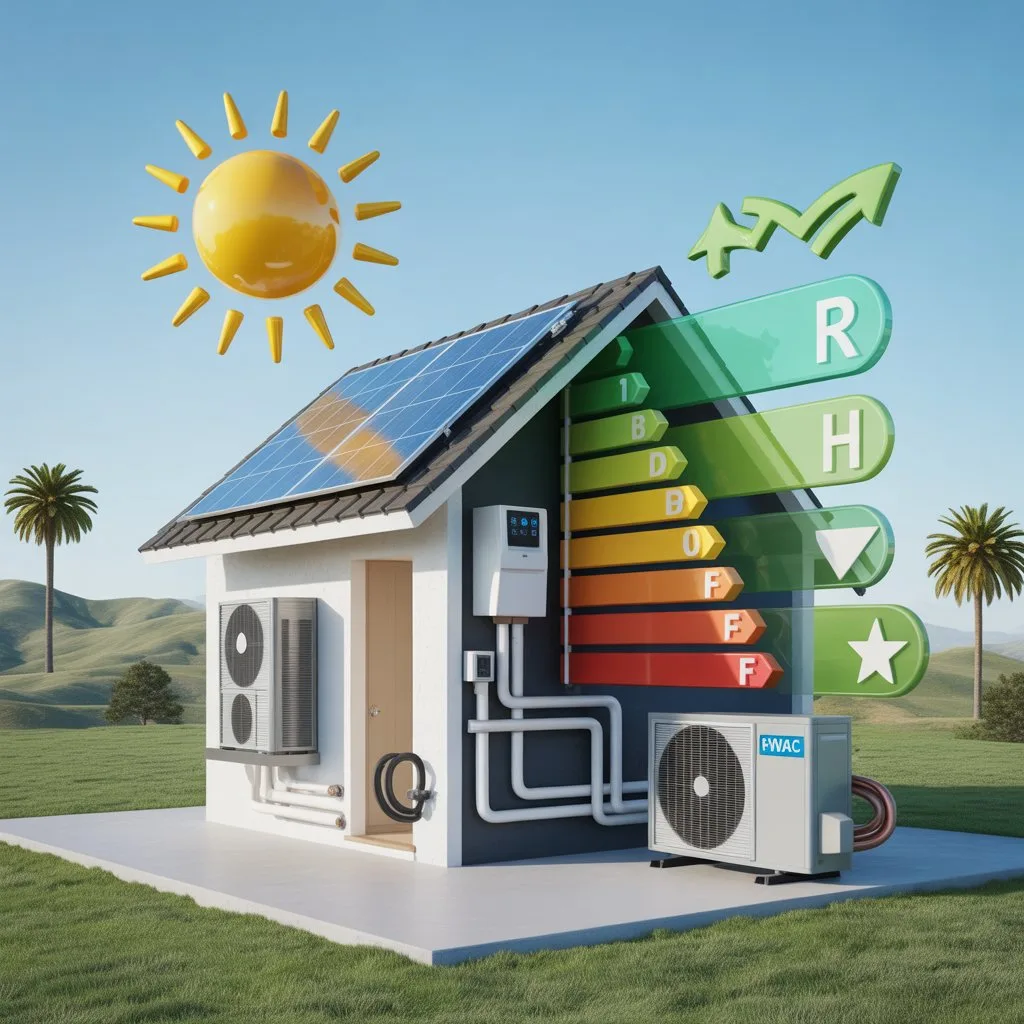
If your heating and cooling system is aging, 2026 is still a strong time to replace it and get real money back. California HVAC rebates 2026 programs remain active through utility companies, air quality districts, and state-administered funds even as some high-profile federal programs have closed their waitlists.
For many homeowners, the biggest gap isn’t finding rebatesit’s understanding which HVAC systems actually qualify and how installation decisions affect eligibility. This is where experienced contractors like HomeRight Inc step in, helping homeowners select compliant, high-efficiency systems that align with active rebate programs.
This guide walks you through every active program, income-based tier, equipment requirement, and application step so you can move forward with confidence.
What Are California HVAC Rebates and How Do They Work?
California HVAC rebates are financial incentives offered by utility companies, state agencies, and regional air quality districts to encourage homeowners to replace old, polluting systems with high-efficiency, low-emission alternatives. These rebates reduce your out-of-pocket cost either as an upfront discount applied directly to your contractor invoice or as a check issued after installation is complete.
Most active programs in 2026 focus on heat pump HVAC systems, which can both heat and cool your home using electricity rather than burning natural gas. According to energy experts, modern heat pumps can reduce electricity use for heating by up to 75% compared to older resistance-based systems, making them the centerpiece of California’s clean energy push.
Rebates work alongside, not instead of, each other. When you understand how to layer multiple programs, your total savings can be significantly higher than any single program offers alone.
The Current Rebate Landscape in 2026: What Is Still Open
The rebate environment shifted considerably in early 2026. Here is an honest, up-to-date picture of what is available as of May 2026.
HEEHRA (High-Efficiency Electric Home Rebate Act)
HEEHRA, funded by the federal Inflation Reduction Act and administered in California by the California Energy Commission through TECH Clean California, was the most generous income-based rebate program in the state. It offered up to $8,000 for income-qualified single-family homeowners installing a new heat pump HVAC system.
However, as of February 24, 2026, HEEHRA single-family rebates are fully reserved statewide. The program is no longer accepting new income verification applications for single-family properties. All unapproved reservation requests have been placed on a waitlist in case additional funding becomes available.
What this means for you:
- Already on the waitlist? Your project remains eligible if your reservation is approved and your heat pump is installed after approval.
- Not yet applied? You can still submit to the waitlist, but approval is not guaranteed.
- Multifamily properties continue to have HEEHRA funding available through TECH Clean California. Multifamily pre-applications are still being processed.
Income tiers for HEEHRA, when funded, are:
| Household Income (% of Area Median Income) | Rebate Amount |
|---|---|
| Below 80% AMI | Up to $8,000 (up to 100% of qualified project cost) |
| 80% to 150% AMI | Up to $4,000 (up to 50% of qualified project cost) |
| Above 150% AMI | Not eligible |
Equipment requirement: All systems must be ENERGY STAR certified. Beginning January 1, 2026, eligible systems must also use refrigerants with a Global Warming Potential (GWP) of 700 or lower, per the EPA Technology Transition Rule.
SMUD Heat Pump HVAC Rebate Up to $3,000
For homeowners served by the Sacramento Municipal Utility District (SMUD), this program is one of the most accessible active rebates in California right now. SMUD offers up to $3,000 in rebates for qualifying heat pump HVAC systems installed by a contractor in the SMUD Contractor Network.
Key requirements:
- Must be a SMUD residential customer
- System must be a two-stage (minimum 15.2 SEER2) or variable-stage heat pump
- Installation must be completed by a participating contractor in the SMUD Contractor Network
- New construction and Accessory Dwelling Units (ADUs) are not eligible
- Manufactured or modular homes may qualify if they meet specific criteria
How you get paid: Your contractor submits the rebate application on your behalf after installation. You do not need to submit separate paperwork independently.
SMUD rebates can also be stacked with other statewide and utility incentives. Ask your contractor about combining this with additional programs to maximize your savings.
LADWP GoZero Program Up to $3,000
Customers of the Los Angeles Department of Water and Power (LADWP) can access the GoZero incentive program, which offers rebates of up to $3,000 for qualifying zero-NOx emission heat pump HVAC systems. This is one of the more flexible programs available in 2026 because it allows applications after installation rather than requiring a reservation upfront.
Eligibility for GoZero:
- Must be a LADWP customer
- Equipment must be ENERGY STAR certified and zero-NOx rated
- Applies to single-family homes and some multifamily units within the South Coast AQMD jurisdiction
- Includes central, split, mini-split, and multi-split heat pump systems
Tip from the field: LADWP also recently increased its Consumer Rebate Program rebates. Heat Pump HVAC systems purchased and installed on or after November 1, 2025 are eligible for up to $2,500 per ton, making LADWP one of the more rewarding utility programs currently active.
SCE (Southern California Edison) Incentives
Southern California Edison offers its own suite of incentives for qualifying heat pump upgrades, including smart thermostat rebates and enhanced incentives for upgrades in high-demand areas. SCE rebates vary by program cycle and equipment type, so confirming current availability with your contractor before installation is important.
SCE incentives can be stacked with GoZero and federal programs where allowed.
PG&E and SDG&E Utility Rebates
Pacific Gas and Electric (PG&E) and San Diego Gas and Electric (SDG&E) each administer rebate programs for residential heat pump HVAC upgrades. Specific amounts and availability depend on your rate class and the system you install. Both utilities update their programs regularly, and a licensed contractor familiar with your utility’s current offerings is your best resource for confirming eligibility before you sign a contract.
How to Stack California HVAC Rebates 2026 for Maximum Savings
One of the most powerful and most overlooked strategies for 2026 is stacking multiple incentive sources on a single project. Here is how well-positioned California homeowners are combining programs:
- Utility rebate (SMUD, LADWP, PG&E, SDG&E, or SCE) applied at point of installation
- GoZero incentive (for South Coast AQMD area homeowners) applied after installation
- HEEHRA waitlist (if income-eligible) applied if additional funding becomes available
A realistic example: A homeowner in the Sacramento area installs a qualifying variable-stage heat pump HVAC system through a SMUD-participating contractor. They receive a $2,500 SMUD rebate applied to their contractor invoice and submit for an additional program through their utility. Their total upfront savings reduce a $9,000 project cost to closer to $6,000 or less before any future funding materializes.
Important rule: As of July 15, 2025, a project cannot receive both a TECH Clean California incentive and a HEEHRA rebate. If you have an approved TECH incentive reservation, you cannot switch to HEEHRA. Understand which program path you are on before committing.
Equipment That Qualifies for California HVAC Rebates 2026
Not every system qualifies. Programs share common eligibility standards in 2026. Generally, qualifying equipment includes:
- Two-stage or variable-capacity heat pump HVAC systems with a minimum 15.2 SEER2 rating
- ENERGY STAR certified units (check the ENERGY STAR product database before purchasing)
- Systems using refrigerants with a GWP of 700 or lower (required for HEEHRA-eligible systems since January 1, 2026)
- Non-heat pump to heat pump conversions (most programs require you to be switching from a gas or resistance system, not simply replacing one heat pump with another)
Systems that typically do not qualify:
- Single-stage air conditioners
- New construction or ADU installations (most utility programs)
- Dual-fuel systems (no longer eligible under several California programs)
- Equipment installed before a reservation is approved (for HEEHRA specifically)
Step-by-Step: How to Apply for California HVAC Rebates
Applying for California HVAC rebates 2026 does not have to feel overwhelming. Following a clear sequence keeps your application on track and your rebate secured.
Step 1 Confirm your utility provider. Your utility company determines which programs you can access. SMUD, LADWP, PG&E, SDG&E, and SCE each have their own program structures.
Step 2 Check your income eligibility. If you believe you qualify for HEEHRA based on income, visit the TECH Clean California HEEHRA page to review the waitlist process. Even if single-family funds are reserved, getting on the waitlist costs nothing.
Step 3 Find a certified contractor. Most programs require installation by a participating or certified contractor. Use the Switch Is On Contractor Finder at switchison.org to locate HEEHRA-trained and TECH-certified contractors in your area.
Step 4 Get a reservation (where required). For programs that require a pre-installation reservation, your contractor submits the reservation on your behalf. No work should begin until the reservation is approved.
Step 5 Select qualifying equipment. Work with your contractor to choose an ENERGY STAR certified, compliant system. Confirm the refrigerant GWP is 700 or lower if applying to any HEEHRA-related program.
Step 6 Document everything. Keep copies of your purchase receipt, installation invoice with itemized labor and equipment costs, manufacturer’s AHRI certificate, and any approval letters from the rebate program.
Step 7 Submit your application. For most utility programs, your contractor submits on your behalf. For others, such as GoZero, you or your contractor submits documentation through the program portal after installation is complete.
Step 8 Receive your rebate. Rebates are issued either as an upfront discount on your invoice or as a check or electronic funds transfer within approximately 20 days of application review, depending on the program.
Rebate Program Comparison at a Glance
Program Max Rebate Income Required Status (May 2026) Application Timing HEEHRA (Single-Family) $8,000 Yes (under 150% AMI) Waitlist only Pre-installation approval required HEEHRA (Multifamily) Up to $14,000/unit Yes Active Pre-installation approval required SMUD Heat Pump HVAC $3,000 No Active Post-installation via contractor LADWP GoZero $3,000 No Active Pre or post-installation LADWP Consumer Rebate Up to $2,500/ton No Active Post-installation SCE Incentives Varies No Active (confirm with utility) Varies
Avoid These Common Mistakes
Many homeowners lose their rebates not because they chose the wrong system, but because of avoidable process errors. Watch out for these:
- Installing before getting a reservation. HEEHRA is strict: no approved reservation means no rebate, with very limited exceptions.
- Choosing a non-participating contractor. Programs like SMUD and HEEHRA require installation by contractors in specific networks. Verify contractor eligibility before signing any contract.
- Missing the refrigerant requirement. Since January 1, 2026, systems must use low-GWP refrigerants to qualify for HEEHRA-adjacent programs. Confirm this detail with your equipment supplier.
- Not stacking programs. Most homeowners only apply to one program. Stacking utility rebates with GoZero or other regional incentives can add hundreds or thousands more in savings.
- Falling for scams. The only IRA-funded home electrification rebates in California come through HEEHRA-trained, TECH Clean California-certified contractors. No legitimate program asks for financial statements or bank information directly. If something feels wrong, contact the California Department of Consumer Affairs at 1-800-952-5210.
Why Upgrade Now Even With HEEHRA Fully Reserved
Some homeowners hear that HEEHRA single-family funds are gone and decide to wait. That reasoning often costs more than it saves. Here is why acting in 2026 still makes sense:
Utility programs remain open and fully funded. SMUD, LADWP, and other utilities are offering meaningful rebates right now, with no waitlists.
Energy bills keep rising. Every month you operate an inefficient system, you are paying more than necessary. A modern variable-capacity heat pump reduces heating and cooling costs substantially over time.
Equipment costs are stabilizing. Supply chain pressures that drove up HVAC equipment prices have eased. 2026 pricing is more predictable than recent years.
New program phases may open. California and the Department of Energy are actively working on additional funding allocations. Homeowners already positioned with qualifying equipment and certified contractors are first in line when new funds become available.
California’s electrification timeline. The state continues to move toward all-electric homes. Installing a compliant heat pump system now future-proofs your home against evolving building codes and potentially higher costs for gas-based systems down the road.
Final Thoughts
California HVAC rebates 2026 are still real, still significant, and still within reach for most homeowners even as the landscape has changed since early 2026. The key is knowing which programs apply to your utility territory, what equipment qualifies, and in what order to submit your applications. Moving without a plan often means missing money that was already set aside for you.
