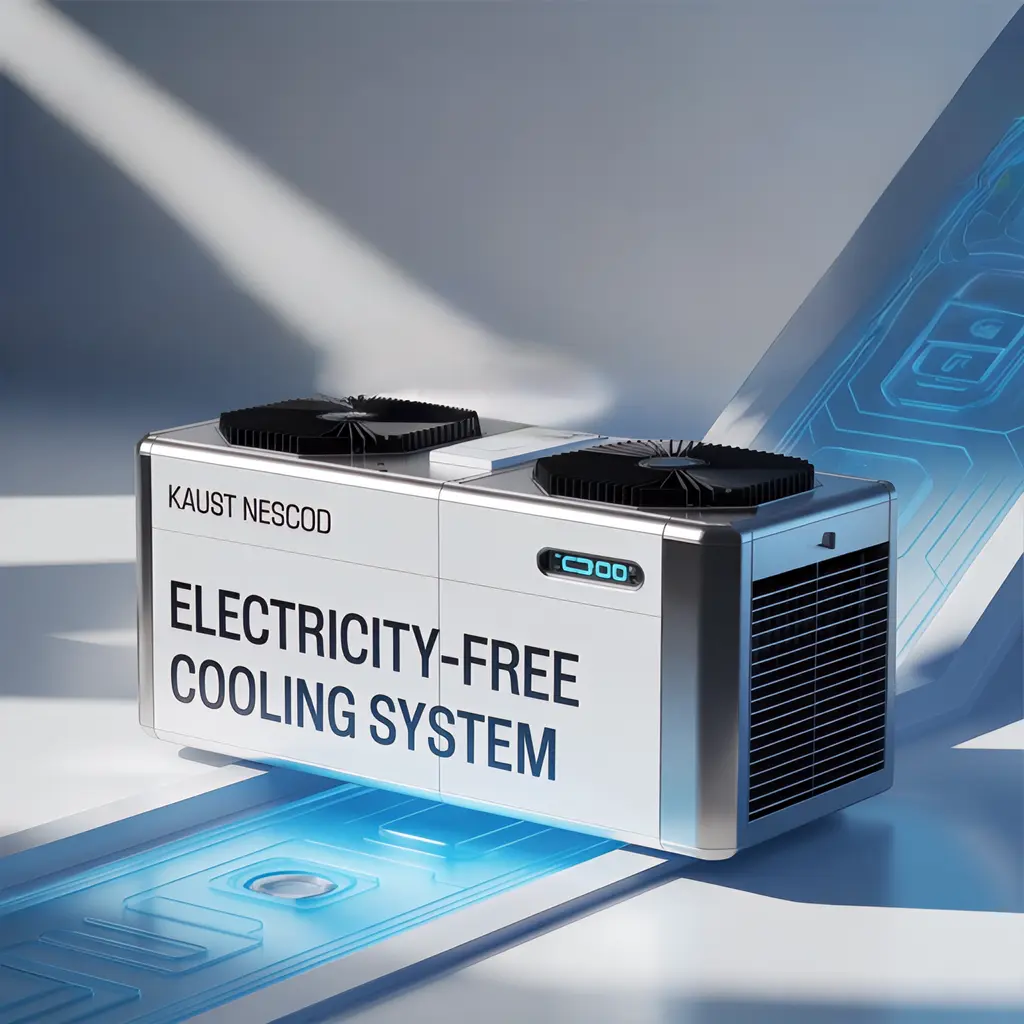
Air conditioning has been the dominant answer to heat for more than a century, but it comes at a staggering cost. Globally, air conditioning already accounts for roughly 10% of all electricity consumption, a figure that is climbing every year as temperatures rise and populations in hot regions grow. In the United States alone, AC systems cost homeowners approximately $32 billion annually in electricity bills.
Now a team of researchers at King Abdullah University of Science and Technology (KAUST) in Saudi Arabia has developed an alternative that uses no electricity at all. Their system, called NESCOD, is drawing global attention, and for good reason: it works, it is cheap to build, and it targets a problem that affects hundreds of millions of people.
What Is NESCOD?
NESCOD stands for No Electricity and Sustainable Cooling on Demand. Developed by a team led by Professor Peng Wang at KAUST’s Water Desalination & Reuse Center and published in the journal
Energy & Environmental Science, the system delivers meaningful cooling through a chemical reaction: no compressors, no fans, no motors, and no power grid required.
The core mechanism is simple: dissolve a salt in water, and you extract heat from the surrounding environment. NESCOD identifies the optimal salt for this reaction and pairs it with a solar-powered regeneration cycle, making the entire system self-sustaining and repeatable.
25°C → 3.6°C
Temperature drop achieved in controlled lab tests in just 20 minutes.
Source:
KAUST Energy & Environmental Science
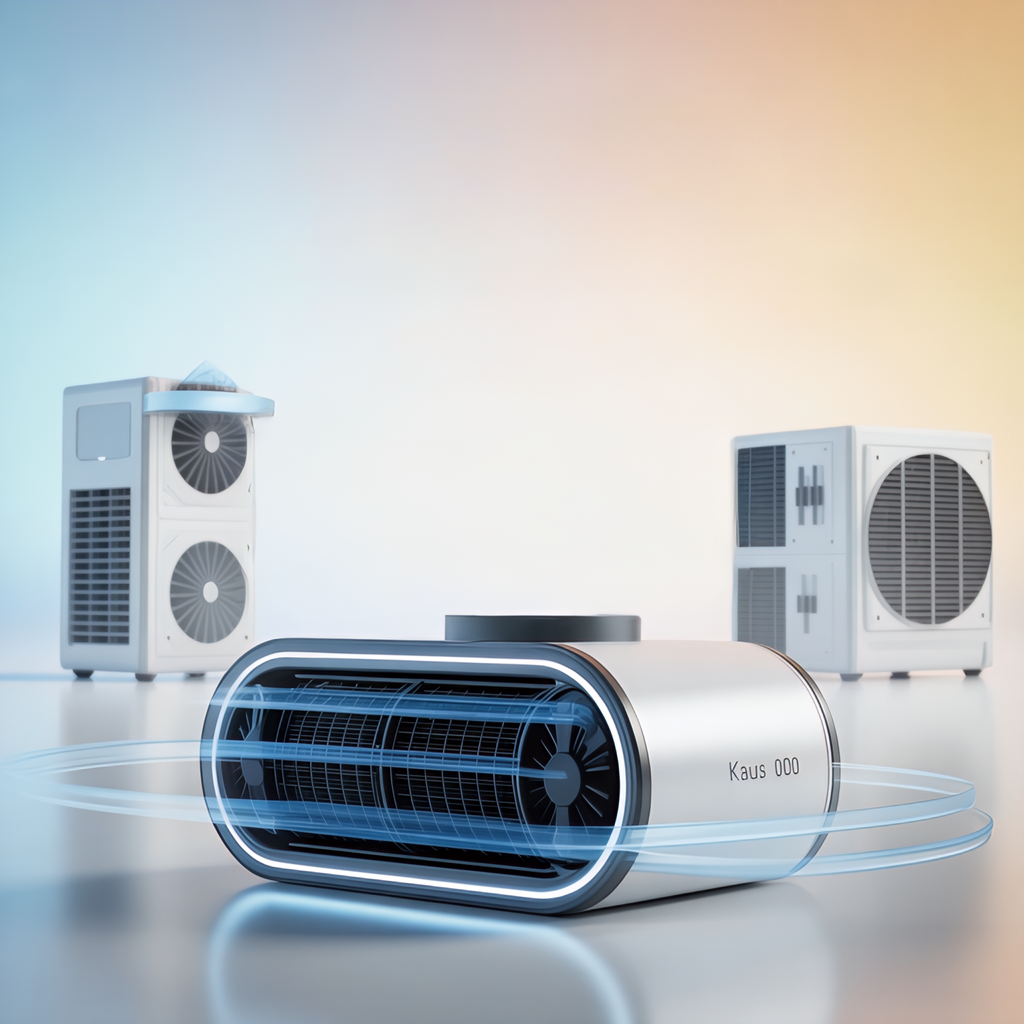
The Science How It Actually Works
The chemistry behind NESCOD is a process called
endothermic dissolution. When certain salts dissolve in water, they do not release heat; they absorb it. This heat is drawn directly from the surrounding environment, producing a measurable cooling effect. The faster and more completely a salt dissolves, the stronger the effect.
The KAUST team systematically tested multiple salts and found that
ammonium nitrate outperformed all alternatives. Its water solubility is exceptionally high, and its heat-absorbing capacity is approximately
four times greater than the next-best alternative, ammonium chloride. Ammonium nitrate is also already manufactured at an industrial scale it is a common agricultural fertilizer, which means it is widely available and inexpensive globally.
Cooling Phase
Ammonium nitrate crystals dissolve into water. The endothermic reaction absorbs heat from the environment, rapidly dropping surrounding temperatures. In lab tests, this brought 25°C down to 3.6°C in 20 minutes.
Solar Regeneration Phase
After the cooling cycle, solar energy is used to evaporate the water from the ammonium nitrate solution. The salt crystallizes back into its solid form, ready to be reused for the next cooling cycle no external power required.
Water Recovery (Bonus Step)
The water evaporated during regeneration can be captured through solar distillation, producing clean water as a byproduct. This addresses two resource challenges cooling and water access in a single system.
This closed-loop design means NESCOD can run indefinitely without a power source, as long as sunlight is available for regeneration which makes it ideally suited to the hot, sunny regions where cooling demand is most acute.
Why This MattersThe Global Cooling Crisis
NESCOD was not built in a vacuum. It addresses a converging set of global pressures that the HVAC industry is only beginning to grapple with.
700M+
People worldwide without access to electricity for whom traditional AC is simply impossible
10%
Share of global electricity consumption attributable to air conditioning (IEA)
40%
Projected increase in electricity demand from space cooling by 2030
4×
More efficient than the next-best salt tested ammonium chloride
As KAUST researchers stated, rising global temperatures and more frequent heatwaves are intensifying cooling demand precisely in regions that lack reliable electricity infrastructure. Off-grid communities in sub-Saharan Africa, South Asia, and parts of the Middle East face a paradox: the hotter it gets, the more cooling they need, but the less access they have to the electric grid that powers conventional AC.
NESCOD vs. Traditional Air Conditioning: A Direct Comparison
| Feature |
NESCOD (KAUST) |
Conventional AC |
| Electricity Required |
None |
Yes (significant) |
| Primary Energy Source |
Solar (regeneration only) |
Grid electricity |
| Mechanical Components |
None (no compressor, fans, or motors) |
Compressors, fans, refrigerant circuits |
| Carbon Emissions |
Near-zero |
High (grid-dependent) |
| Primary Material |
Ammonium nitrate (common fertilizer) |
Synthetic refrigerants (HFCs) |
| Material Cost |
Low — widely available globally |
Higher, supply-chain dependent |
| Off-Grid Capable |
Yes |
No |
| Byproduct |
Recoverable clean water |
Heat waste, refrigerant risk |
| Demonstrated Temperature Drop |
25°C → 3.6°C in 20 min (lab) |
Variable / thermostat-controlled |
| Current Stage |
Laboratory / early research |
Mature, mass-market technology |
Important Context: NESCOD has been demonstrated in controlled laboratory conditions. As of April 2026, it has not yet been deployed at building scale or in real-world field trials. The research team’s published results are promising, but commercial viability including heat capacity for large spaces, cost-per-unit, and durability across many cycles remains to be proven at scale.
Potential Applications Beyond Home Cooling
The KAUST researchers specifically highlight several use cases beyond simply replacing residential air conditioning:
Food preservation :In rural and off-grid regions, refrigeration for food storage is as critical as space cooling. A NESCOD-type system could provide the cold required to slow spoilage without grid access.
Temperature-sensitive pharmaceutical storage : Vaccines and medications require cold chain maintenance. In areas with unreliable power, a solar-regenerated chemical cooling system could be transformative for healthcare delivery.
Building pre-cooling :Even in grid-connected buildings, NESCOD could function as a supplementary or peak-demand cooling system, reducing strain on the electric grid during extreme heat events.
Electronic device cooling : A parallel KAUST research line (led by Professor Qiaoqiang Gan) has developed passive radiative cooling technologies specifically for keeping solar panels and electronic systems cool another area where electricity-free cooling adds direct economic value.
KAUST’s Broader Cooling Research Programme
NESCOD is not a one-off. KAUST has developed a portfolio of electricity-free and passive cooling technologies over the past several years, each addressing a different mechanism:
Passive Radiative Cooling
KAUST Professor Qiaoqiang Gan’s group developed a vertical double-sided architecture that radiates thermal heat back to the sky, using the atmosphere’s transparent window to channel heat directly to outer space. Because outer space operates near absolute zero, it functions as an effectively infinite heat sink. This technology requires no electricity and produces zero carbon emissions. A lubricant coating developed by the same team a blend of a commercial polymer and silicone oil eliminates surface pinning of water droplets, enabling gravity-driven passive water collection alongside the cooling effect.
Atmospheric Water Harvesting + Cooling
A related system extracts water from the atmosphere using only gravity, with no electricity. The collected water can be repurposed for irrigation, washing, building cooling, and other uses. Scientists note that the atmosphere contains approximately six times more fresh water than all rivers combined — a largely untapped resource in arid environments.
Solar-Enhanced Cooling for Solar Panels
In 2026, KAUST published research on a composite material that absorbs air moisture at night and releases it during the day, passively cooling solar panels. This addresses a critical efficiency problem: conventional solar panels convert only about 20% of sunlight into electricity, with the remainder absorbed as heat that degrades performance. The KAUST composite material extended solar cell longevity by approximately 200% in testing.
The HVAC Industry Context: A $333 Billion Market Under Pressure
To understand why NESCOD matters commercially, it helps to understand the scale and direction of the HVAC industry it is entering.
$333B
Projected total HVAC market size by end of 2026, including services and software (BDR)
7.4%
CAGR of the global HVAC market (BDR, 2026)
8.1%
CAGR forecast through 2035 market expected to reach $1.2 trillion (Global Market Insights)
48.8%
Share of global HVAC market incremental growth from Asia-Pacific (Technavio)
The HVAC market is growing rapidly, but it is also under mounting pressure from multiple directions simultaneously:
Refrigerant regulations: The Kigali Amendment is mandating phase-downs of high-GWP hydrofluorocarbons (HFCs) across 155 nations, forcing manufacturers to reformulate products around lower-GWP alternatives like R-32 and R-454B. This is a major cost driver across the industry in 2026.
Electrification momentum: Over 48% of U.S. households have now transitioned to electrical heating systems, driven by federal tax credits and state-level rebates. Heat pumps accounted for more than 69% of the market share in 2024.
Energy cost pressure: Air conditioning now consumes nearly 7% of all electricity produced in the U.S., costing homeowners roughly $32 billion per year. Over 60% of HVAC customers are now willing to pay a premium for eco-friendly, energy-efficient systems.
Workforce shortages: Despite strong demand the industry is projected to grow 9% through 2033 a shortage of trained technicians is constraining service capacity. The average HVAC technician is 40 years old, and the pipeline of new entrants remains insufficient.
Smart integration: Building automation systems that can reduce energy consumption by more than 25% compared to non-automated buildings are becoming standard specification in new commercial construction. The U.S. smart thermostat market is projected to reach $3.86 billion by 2029.
What Does NESCOD Mean for the HVAC Industry?
In the near term not much for mainstream HVAC contractors. NESCOD is a laboratory-stage technology. It does not yet replace a split-system air conditioner in a home or office building, and it is unlikely to do so in the next few years without significant engineering development and field validation.
But in the medium and long term, NESCOD and related passive cooling technologies signal a direction of travel that HVAC professionals should take seriously:
The off-grid cooling market is real and growing. Over 700 million people live without electricity. If passive cooling systems like NESCOD can be manufactured and deployed at low cost, they represent an entirely new market segment — one that conventional AC can never address.
Passive cooling will increasingly complement active systems. Even in grid-connected settings, integrating passive pre-cooling or supplementary cooling reduces peak electricity demand. This aligns directly with utility incentive programs and building energy certification requirements.
The regulatory environment favors low-emission alternatives. As HFC phase-downs accelerate and carbon pricing expands, technologies with near-zero operational emissions become more economically attractive relative to conventional refrigerant-based systems.
Investors are watching the space. In February 2026, Carrier Ventures made a strategic investment in ZutaCore, a liquid cooling innovator. Major players including LG announced expanded sustainable HVAC portfolios at the 2026 AHR Expo. The direction of capital is unmistakable.
“Hot regions have high levels of solar energy, so it would be very attractive to use that solar energy for cooling.” — Wenbin Wang, Postdoctoral Researcher, KAUST Water Desalination & Reuse Center
Key Takeaways for HVAC Professionals and Enthusiasts
NESCOD is genuinely novel science from a credible institution. The performance data a 21-degree Celsius temperature drop in 20 minutes using nothing but chemistry and sunlight is striking. The use of cheap, globally available ammonium nitrate as the primary material is a deliberate design choice that prioritizes accessibility.
At the same time, the gap between laboratory demonstration and deployable product is significant. The HVAC industry is well-acquainted with promising technologies that take a decade or more to reach commercialization or never do.
What NESCOD represents most clearly right now is a signal: that the $333 billion HVAC industry is not immune to fundamental disruption, that the physics of cooling can be approached from entirely different angles, and that the 700 million people currently beyond the reach of conventional air conditioning represent both a humanitarian challenge and an enormous untapped market.
HVAC professionals who understand passive and chemical cooling principles will be better positioned to advise clients, evaluate emerging products, and adapt their businesses as the landscape evolves whether that evolution takes five years or fifteen.