

When constructing a new house, you can make informed decisions from the start, including your HVAC system. The acronym HVAC (heating, ventilation, and air conditioning) affects your comfort, indoor air quality, and energy bills.
An efficient system will ensure that your house is warm during winter and cool during summer and reduce your total energy expenses. The decision is more crucial in Sacramento and the Bay Area, where needs are way different. The summers in Sacramento are hotter, though the Bay Area usually has milder temperatures, cooler evenings, and, in certain instances, is more humid.
This means that not all HVAC systems will be equally effective with all homes. This blog explains which systems work best for new homes in Sacramento and the Bay Area, what to consider, and how to find a system that will provide comfort, efficiency, and long-term savings.
Understanding HVAC Needs in Sacramento and the Bay Area
You must know what is really required in your home before you decide on which system to use. Many homeowners assume that the bigger the better, but this is not the case when it comes to HVAC.
The proper system is based on the climate, the size of the home, insulation, layout, windows, air flow, and the way your family utilizes the space. A new home should feel balanced and comfortable room by room.
It should stay cool in summer and warm in winter and move air in a clean and constant manner. It can only occur when the HVAC system is selected to fit the home rather than chosen without proper planning.
Climate Differences Between Sacramento and the Bay Area
The weather is hot and dry in Sacramento. Summer days can stay hot for long stretches. Therefore, the typical cooling system needed in a Sacramento home needs to have a larger load capacity and be efficient to prevent high electricity bills.
Winters are not harsh, but can be cold, and heating is significant. Homes in the Bay Area have average temperatures. In certain cities, the climate is cool even during summer, especially by the seaside.
Humidity control, fresh air, and heating of the home do not need to be as high as in Sacramento, yet they are necessary. Fog and humidity that can affect comfort can also occur in other places.
These climate variations affect the best system choice. Cooling and energy efficiency could be the most significant in Sacramento. Adaptability, efficiency, and comfort throughout the year could be more important in the Bay Area.
Why New Homes Need Smart HVAC Planning
New homes are built to a standard superior to most of the existing homes. Insulation, air sealing, windows, and other materials are enhanced. This is a good thing as it aids in maintaining a comfortable temperature within. However, it also implies that the HVAC system should be properly sized.
In case it is too large, it might cause too rapid cooling or heating of the house and shut down. This sounds wonderful, however, it may cause variations in temperature and energy waste as well as equipment failure.
When the system is undersized, it can take more time to run and fail to efficiently heat or cool the house. These issues are avoided through good HVAC design.
It will make sure that your system fits the house design. This guarantees greater comfort, less load on the system, and lower long-term cost.
Types of HVAC Systems for New Homes
There is no single HVAC system that fits every home. The best choice depends on the home design, local climate, energy goals, and budget. Here are the main systems homeowners usually consider for new construction.
Central Air Conditioning Systems
Central HVAC systems are a popular option for new construction. They distribute hot or cooled air through a system of ducts. This system is particularly good if you have a medium or large home and want a single system to cover the entire area. With a central system, you can have consistent comfort across rooms.
It’s a common choice, and many homeowners find it appealing because it can be used to both heat and cool. For Sacramento’s cooling needs, a central system with a high efficiency rating can be an ideal option. The problem with central systems is that they use ducts. If the ducts are poorly designed or leaky, the system efficiency will be reduced. That’s why good design and installation are important.
Ductless Mini Split Systems
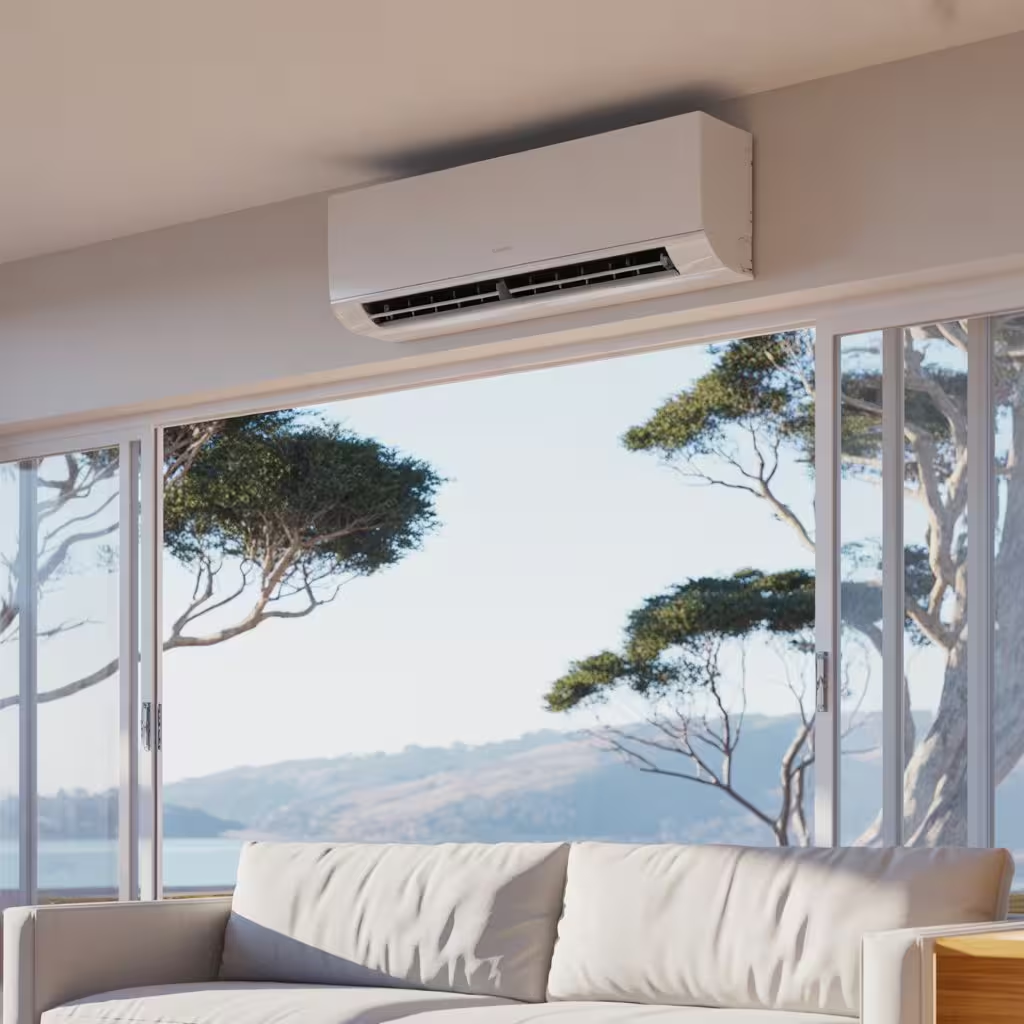
Ductless Mini Split Systems have gained popularity in recent years. The systems don’t have ducts. They use an outside unit connected to one or more indoor units installed in various rooms or zones.
This gives homeowners more control. You can keep one part of the house cooler than the other and not have to cool an unused part of the house. This makes mini splits a good choice for small houses, open floor plans, home additions and families that prefer to save energy.
Mini splits are also very effective in the Bay Area, where homeowners may not want to install extensive ductwork for efficient cooling and heating. They can also be used in Sacramento if sized and zoned correctly.
Heat Pump Systems
Heat pumps are one of the strongest options for new homes. They can be used for both heating and cooling, and transfer heat rather than generate it. That can be an efficient way to produce energy.
During the hotter months, a heat pump takes heat out of your home and relocates it outdoors. In winter, it extracts heat from the outside air and transfers it inside. So it can often be an efficient, all in one solution.
In the Bay Area, they are very appealing due to the climate. Many Sacramento homeowners also use them now because they are much more efficient than they were in the past, and can provide good comfort with relatively low energy consumption.
Hybrid Dual Fuel Systems
Hybrid dual fuel systems have a heat pump and gas furnace. It alternates between the two based on the outside temperature. The heat pump operates efficiently when temperatures are higher. It then kicks in to provide more heat as the temperatures get cooler.
This arrangement offers homeowners the benefits of both. It’s an attractive option in Sacramento, where air conditioning is important, but heating is still needed in the winter. And it can be a great option for those seeking efficiency but who need the flexibility of a furnace for cold weather.
Best HVAC Systems for Sacramento Homes
In Sacramento, homes typically require an HVAC system to cope with hot, dry summers. Cooling capacity is important, but efficiency is critical, too. A system that cannot cool effectively can become expensive to run. For Sacramento homes, high-efficiency central air is a popular choice. It can evenly cool a home and is particularly good for large homes.
Heat pumps are also gaining popularity, especially for those looking for an all-electric system and reduced costs. Hybrid systems can be a great option if you need effective cooling and reliable wintertime heat.
It all depends on the design of the home. A two-story home may be best suited for a zoned central system. A smaller, newer home might be best suited for a heat pump or ductless system. It is not just the type of system that needs to be selected, but also the size and placement of that system.
Best HVAC Systems for Bay Area Homes
In the Bay Area, homes often don’t need as much cooling power as Sacramento homes. In many areas, the weather remains mild, and efficiency and flexibility are more important than sheer cooling power. So heat pumps are a great option in the Bay Area.
They are all-in-one heating and cooling systems, and they are well-suited to the climate. Mini split systems are also good options for zoned heating and cooling, and for eliminating energy losses from ducts. Air quality is also an important consideration in the Bay Area.
Some Bay Area homes deal with coastal moisture, while others need better ventilation and filtration for indoor comfort. In these instances, HVAC decisions should also include filtration, consistent airflow, and humidity control.
Key Features to Look for in a New HVAC System
Don’t just look at brands and costs when comparing HVAC systems. What matters most are the features that impact comfort and performance. High efficiency is a must. This means they will use less energy for the same amount of work, saving you money in the long run.
Smart thermostats are also very useful since they make it easy to adjust the temperature and can automatically minimize energy loss. Sound levels are more important than you might think. The noise can get annoying, especially if you have a new home that you want to be quiet.
Zoning is also a useful feature as it allows you to control the temperature in different zones of the house. That’s useful for multi-storey homes, those with big windows, or areas that are warmer than the rest of the house.
It’s also important to have good filtration and ventilation. Comfort depends on more than just the temperature. Filtered air, good air flow, and low dust can improve the comfort of a home.
Trusted HVAC Brands for Sacramento New Homes
Homeowners can be more assured to construct a new home in Sacramento when they select a reliable brand of HVAC. The appropriate brand will be able to provide superior cooling capability, greater power efficiency, trusted components, and long-term comfort in a region with hot and challenging summers.
Carrier: It is reputed to have good cooling capability, energy-saving systems, and a large variety of models in new homes. Homeowners usually select it because they want to have solid comfort throughout the long and hot summers in Sacramento.
Trane: Trane is well known as being durable and reliable in extreme weather conditions. It is popular among many homeowners due to its good construction and reliable long-term use.
Lennox: It is reputed in high efficiency HVAC systems and superior comfort technology. It is a robust choice in new dwellings, whereby energy savings and contemporary features are important.
Rheem: They offer reliable heating and cooling systems at a practical price point for many homeowners. It is commonly regarded as a balance between performance, value, and a daily reliability.
American Standard: These are relied on to provide the long lasting system, noiseless performance and constant indoor comfort. It makes a good decision to homeowners seeking a reliable system that has a good reputation.
Mitsubishi Electric: It is particularly popular in ductless mini split and heat pump. It is highly applicable in new homes that are energy-efficient and require a room-by-room comfort control.
How to Choose the Right HVAC System
The most important thing when selecting a system is to consider the home’s overall needs. Start with the home’s size and layout. An open plan home will be different from a smaller house with multiple rooms.
The height of the ceilings, the windows, the insulation, and the sun exposure all affect the load on the HVAC system. And be smart with your money. Consider more than just the initial cost. Consider monthly operating costs, repair costs, and its lifespan.
A low-cost system may save you money initially, but it will cost you in the long run if it is inefficient. But most importantly, have a professional carry out a load calculation. This will determine the right system size for your home. It’s among the most important things in ensuring initial comfort.
Common Mistakes to Avoid When Installing HVAC
This is the one place where a short list helps most because these mistakes can cost homeowners a lot of money and comfort later on.
- Choosing a system that is too big or too small
- Ignoring duct design and airflow planning
- Focusing only on the upfront price
- Skipping zoning in homes that need it
- Overlooking indoor air quality features
- Hiring installers without checking experience or licensing
- Forgetting to plan for regular maintenance
Each of these mistakes can hurt performance. Even a great HVAC system can disappoint if it is installed badly or matched to the wrong home setup.
Cost of Installing HVAC Systems in New Homes
The cost of an HVAC system depends on many factors, including the type of system, the size of the home, the complexity of the installation, and whether such a system needs to have ductwork. Central systems can be more expensive if complete duct design and installation is required.
Ductless systems can be simpler, but the cost will depend on the number of indoor units required in the home. Heat pumps can be very cost-effective as they offer both heating and cooling. It is also advisable to consider the big picture.
A more efficient system can save on monthly energy bills, decrease the odds of repairs, and increase the value of the home. In California, homeowners may also save on rebates or credits for high-efficiency equipment. This can help make an upgraded unit more cost-effective.
Maintenance Tips for Long-Lasting HVAC Performance
Even the best HVAC system needs care. Regular maintenance helps it stay efficient, last longer, and avoid surprise breakdowns. Homeowners should change air filters on time, keep outdoor units clear of dirt and debris, and schedule seasonal inspections.
Routine service can catch small problems before they grow into expensive repairs. It also helps the system hold its efficiency, which means better comfort and lower bills. In a new home, protecting your HVAC investment with simple maintenance is one of the easiest smart moves you can make.
Should You Hire a Professional HVAC Contractor
Good installation is still important to a high-quality system. Ineffective installation may cause ineffective airflow, inadequate heating, sound problems, wastage of energy, and premature equipment breakdown.
With a good HVAC contractor, one will get the system sized properly, the ductwork or zoning will be done in a proper way and the installation will be fit with the home. Find licensed experts, well-experienced locally, good reviews and a well-defined process. Ask questions and ensure they clarify to you how the system works.
The correct contractor goes beyond equipment installation. They assist you in making a superior decision about your home in the long term.
Conclusion
The selection of an optimal HVAC system in a new home in either Sacramento or Bay Area is not all about heating and cooling. It is a matter of creating a comfortable feeling in the house. Hot summers usually require more cooling and high performance in Sacramento homes.
Bay Area houses frequently have flexible and balanced systems such as heat pumps and ductless mini-splits. The most intelligent decision is one that matches the system to the home, the climate, and how your family will occupy the space.
By concentrating on the correct size, efficiency, air quality, and professional installation, you will be able to make your home feel better with each passing day and less expensive to operate in the long term.
