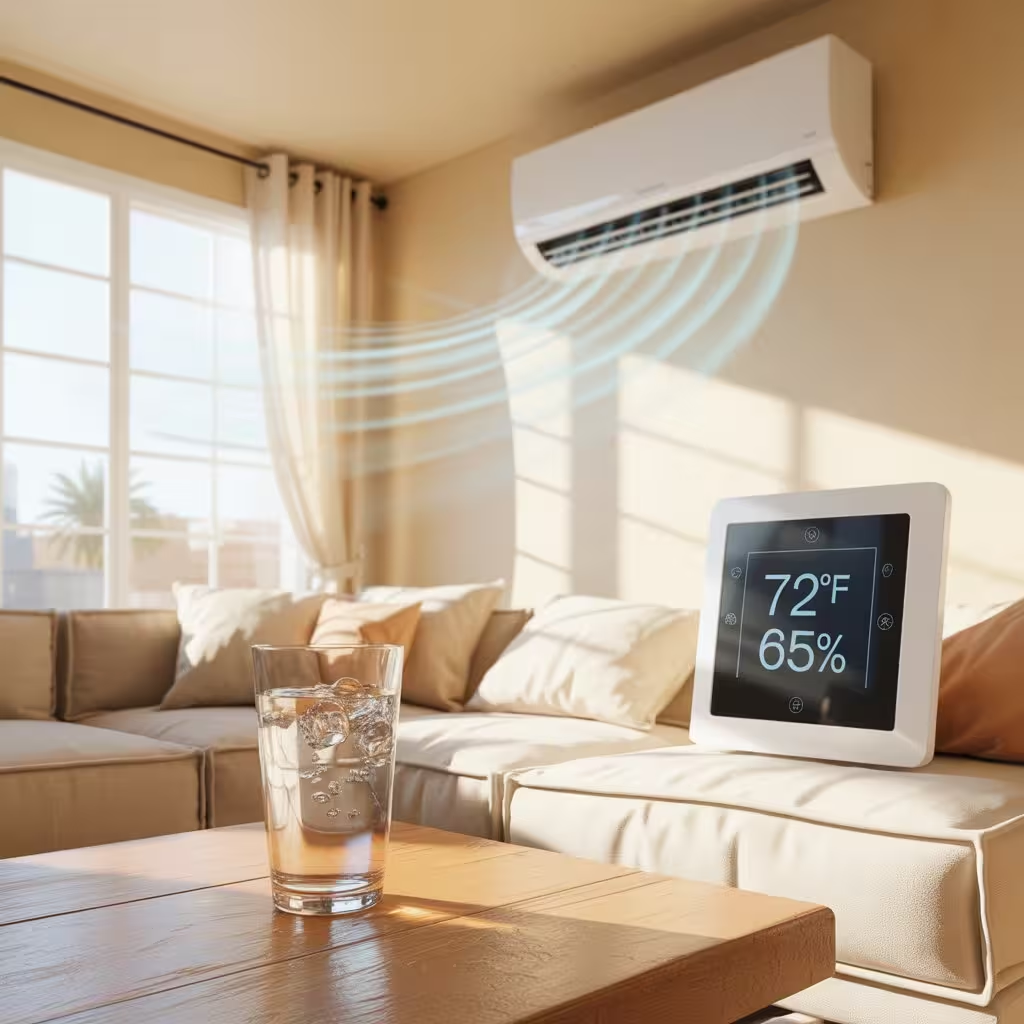
Picture this: it’s a sweltering July afternoon. You crank up the AC, the temperature drops but your home still feels sticky, clammy, and uncomfortable. Sound familiar? You’re not alone, and your AC isn’t necessarily broken.
The truth is, air conditioners do reduce humidity but only when they’re running correctly, sized properly, and maintained regularly. When any of those three factors are off, you end up with a home that’s cool in temperature but still uncomfortably humid.
In this guide, we’re going to break down exactly how your AC removes moisture from the air, why it sometimes fails to do the job, and most importantly what you can do about it. No jargon, no fluff. Just practical answers. The short answer is yes, your AC does lower humidity. But the details matter a lot.
| 30–50% | The ideal indoor relative humidity level for comfort and health, according to the EPA. Most homes run 60–70% in summer without proper AC management. |
The Science Behind It: How Your AC Actually Removes Humidity

Before we get into fixes and tips, it helps to understand what’s actually happening inside your AC unit. Don’t worry this won’t require an engineering degree.
When your air conditioner runs, warm indoor air gets pulled across a component called the evaporator coil. This coil is extremely cold cold enough that moisture in the air condenses onto its surface, just like water droplets forming on the outside of a cold glass on a humid day.
That collected water then drips into a drain pan and exits your home through the condensate drain line. The air that gets pushed back into your rooms has been stripped of that moisture it comes out drier and cooler.
The Simple Step-by-Step Process
| 1 | Warm, humid indoor air is pulled into your AC system through the return vents. |
| 2 | That air passes over the cold evaporator coil typically between 35°F and 50°F. |
| 3 | Moisture in the air hits the cold surface and condenses into liquid water. |
| 4 | The water drips into the drain pan and exits through the condensate drain line. |
| 5 | The nowcooler, drier air is pushed back into your living space. |
| 6 | This cycle repeats continuously as long as the AC is running properly. |
Why Your AC Sometimes Fails at Humidity Control
Here’s the frustrating part: your AC can be running even cooling your home and still be doing a poor job of removing humidity. There are four main reasons this happens, and each one has a clear solution.
Your AC Unit Is Oversized
This is the most common and most misunderstood problem in residential HVAC. Bigger does not mean better when it comes to air conditioners.
An oversized unit cools your home so quickly that it shuts off before completing a full cooling cycle. In the HVAC world, this is called short-cycling. The problem? Humidity removal happens gradually over the length of a cooling cycle. Cut the cycle short and you remove very little moisture leaving a home that feels cold and clammy at the same time.
| COMMON MISTAKE
Never size an AC unit by square footage alone. Proper sizing requires a Manual J load calculation that accounts for insulation, window placement, ceiling height, local climate, and more. Bigger capacity = worse humidity control. |
The Fan Is Set to ‘On’ Instead of ‘Auto’
Check your thermostat right now. If your fan is set to ‘On,’ it runs continuously even when the compressor is off and no cooling is happening. Here’s why that destroys humidity control:
When the compressor shuts off, moisture sitting on the evaporator coil starts to evaporate. If the fan is still blowing, it pushes that evaporated moisture right back into your living space — essentially undoing the dehumidification work the AC just did. Switch your fan from ‘On’ to ‘Auto’ right now. This single change can noticeably reduce indoor humidity within a few hours, with zero cost and zero tools required.
Dirty Evaporator Coils or Clogged Air Filter
The evaporator coil needs direct contact with warm, moist air to do its job. When the coil is coated in dust and grime or when a clogged air filter restricts the airflow reaching the coil condensation drops off dramatically.Dirty coils are not something most homeowners can clean safely on their own it requires coil-cleaning chemicals and proper disassembly. Scheduling annual professional HVAC maintenance ensures your coils, drain line, and filter are all serviced together before the summer cooling season begins.
A dirty filter is the most preventable cause of poor humidity control. It costs nothing to check and very little to replace.
| CONDITION | EFFECT ON HUMIDITY | FIX |
| Clean filter + clean coils | Maximum moisture removal | Maintain this condition |
| Dirty filter only | Reduced airflow, 20-40% less dehumidification | Replace filter ($5-20) |
| Dirty coils only | Poor contact, moisture not condensing properly | Professional coil cleaning ($80-200) |
| Both dirty | Severely compromised — close to no dehumidification | Immediate service needed |
Low Refrigerant Charge
Refrigerant is the fluid that makes your evaporator coil cold. When refrigerant levels are off — either too low from a leak, or incorrectly charged after a service — the coil temperature changes. Too low and the coil freezes over entirely, blocking airflow and stopping dehumidification. Too high and the coil never gets cold enough to condense moisture effectively.If you notice ice forming on the copper lines coming out of your indoor unit, turn the system off immediately and call a technician. A frozen coil means either very low refrigerant or severely restricted airflow — both damage the compressor if left running.
7 Practical Ways to Get Your AC to Lower Humidity Better
These are ordered from easiest and cheapest to more involved — start at the top and work your way down.
1. Switch the Fan to ‘Auto’ Mode
As covered above, this is the single fastest free fix. Auto mode means the fan only runs when the compressor is actively cooling — keeping collected moisture from re-evaporating back into your home. Do this today.
2. Replace or Clean Your Air Filter
A standard 1-inch filter should be replaced every 30 to 90 days depending on usage, pets, and indoor air quality. Hold the filter up to a light — if you can’t see light through it, replace it immediately. A clogged filter is quietly robbing your system of dehumidification efficiency every single day.
3. Keep the Drain Line Clear
The condensate drain line is a small PVC pipe that carries moisture out of your home. Over time, algae and mold grow inside it and cause blockages. A clogged drain line means water backs up into the system, moisture stays indoors, and in severe cases, water overflows into your ceiling or walls.
Simple DIY prevention: Pour a quarter cup of white vinegar into the drain line access port every three months. This prevents algae growth before it becomes a blockage.
4. Use Exhaust Fans Strategically
Kitchens and bathrooms generate enormous amounts of moisture — cooking, showering, and even boiling water add gallons of humidity to your indoor air daily. Running exhaust fans during and for 15 minutes after these activities removes that moisture at the source before it ever reaches your AC system.
5. Seal Air Leaks Around Windows and Doors
Every gap around a window frame, door threshold, or wall penetration is an entry point for outdoor humid air. In a humid climate, your AC can be fighting a constant stream of incoming moisture that it was never designed to handle. A tube of weatherstripping foam ($8) and a can of spray foam insulation ($12) can seal most common entry points in an afternoon.
| Tip by Homeright inc
A quick way to find air leaks: on a windy day, hold a lit incense stick near window frames and door edges. If the smoke wavers, you’ve found a leak. |
6. Add a Standalone Dehumidifier for Problem Areas
Some spaces — particularly basements, laundry rooms, and sunrooms have humidity problems that are beyond what a central AC system can handle on its own. A 50-pint standalone dehumidifier ($150-300) in these areas can maintain comfortable moisture levels year-round, regardless of whether the AC is running.
7. Install a Smart Thermostat
Modern smart thermostats do more than schedule temperature changes. Models like the Ecobee SmartThermostat or Honeywell T9 have built-in humidity sensors and can adjust cooling cycles specifically to manage moisture levels not just temperature. If your humidity levels fluctuate despite everything else being right, a smart thermostat gives your system the intelligence to respond.
Fine Tuning Your System: Technical Settings That Make a Difference
Slow the Fan Speed Down
Most homeowners don’t know this, but reducing your system’s fan speed gives air more contact time with the cold evaporator coil which significantly increases moisture removal. This is especially useful in humid climates where dehumidification matters as much as cooling.
Many modern thermostats and air handlers allow you to adjust fan speed settings. Ask your HVAC technician to configure this during a maintenance visit it’s a quick adjustment that can meaningfully improve comfort.
Consider a Two Stage or Variable Speed System
Standard AC systems are either fully on or fully off. Two-stage and variable-speed systems can run at lower capacities for longer periods — which is ideal for humidity removal because longer run times mean more moisture gets extracted per cycle.
| SYSTEM TYPE | HUMIDITY CONTROL | ENERGY EFFICIENCY | BEST FOR |
| Single-stage (standard) | Basic — short cycles in mild weather | Lowest | Budget installs, dry climates |
| Two-stage | Better — can run at 60-65% capacity | Moderate | Most climates |
| Variable-speed | Best — runs long at low capacity | Highest | Humid climates, comfort-focused homes |
| If you live in a consistently humid climate like coastal California or the Bay Area, a variable-speed system is worth the additional upfront cost. The improvement in daily comfort and the reduction in mold risk more than justifies the investment over a 10-15 year lifespan. |
When to Stop DIYing and Call a Professional
Most of the fixes above are genuinely within the reach of any homeowner willing to spend 20 minutes. But there are situations where professional diagnosis is the right and only safe call.
| HANDLE IT YOURSELF
• Fan set to ‘On’ — switch to ‘Auto’ • Clogged air filter — replace it • Drain line slow — vinegar flush • Air leaks — weatherstrip and seal • Thermostat settings — adjust |
CALL A TECHNICIAN
• Ice forming on refrigerant lines • Drain line fully blocked or overflowing • System short-cycling repeatedly • Coils are dirty — professional cleaning • Low refrigerant suspected — leak check |
| Refrigerant handling requires an EPA Section 608 certification. It is illegal and dangerous for unlicensed individuals to handle refrigerants. If you suspect a refrigerant issue, do not attempt to add refrigerant yourself — call a licensed HVAC technician. |
Running the air conditioner does lower humidity but only when the system is properly sized, correctly configured, and regularly maintained. The most impactful things you can do right now are simple: switch your fan to Auto mode, check and replace your air filter, and flush your drain line with vinegar. These three steps cost almost nothing and can noticeably improve your home’s comfort within 24 hours.
For deeper problems a short cycling system, frozen coils, or refrigerant issues the right move is a professional diagnostic. Catching these issues early protects your compressor, keeps your energy bills in check, and ensures you are not accidentally creating conditions that lead to mold.
If your home stays uncomfortably humid despite everything in this guide, your system may be due for a proper load calculation and right sizing assessment. This is the most impactful and most overlooked HVAC service a homeowner can invest in. According to the U.S. Department of Energy, variable-speed air conditioners not only remove significantly more moisture per cycle than single stage units they also use up to 30% less energy doing it, making them the most cost-effective long-term upgrade for humid climates.